What Is Developing Food Explorer?
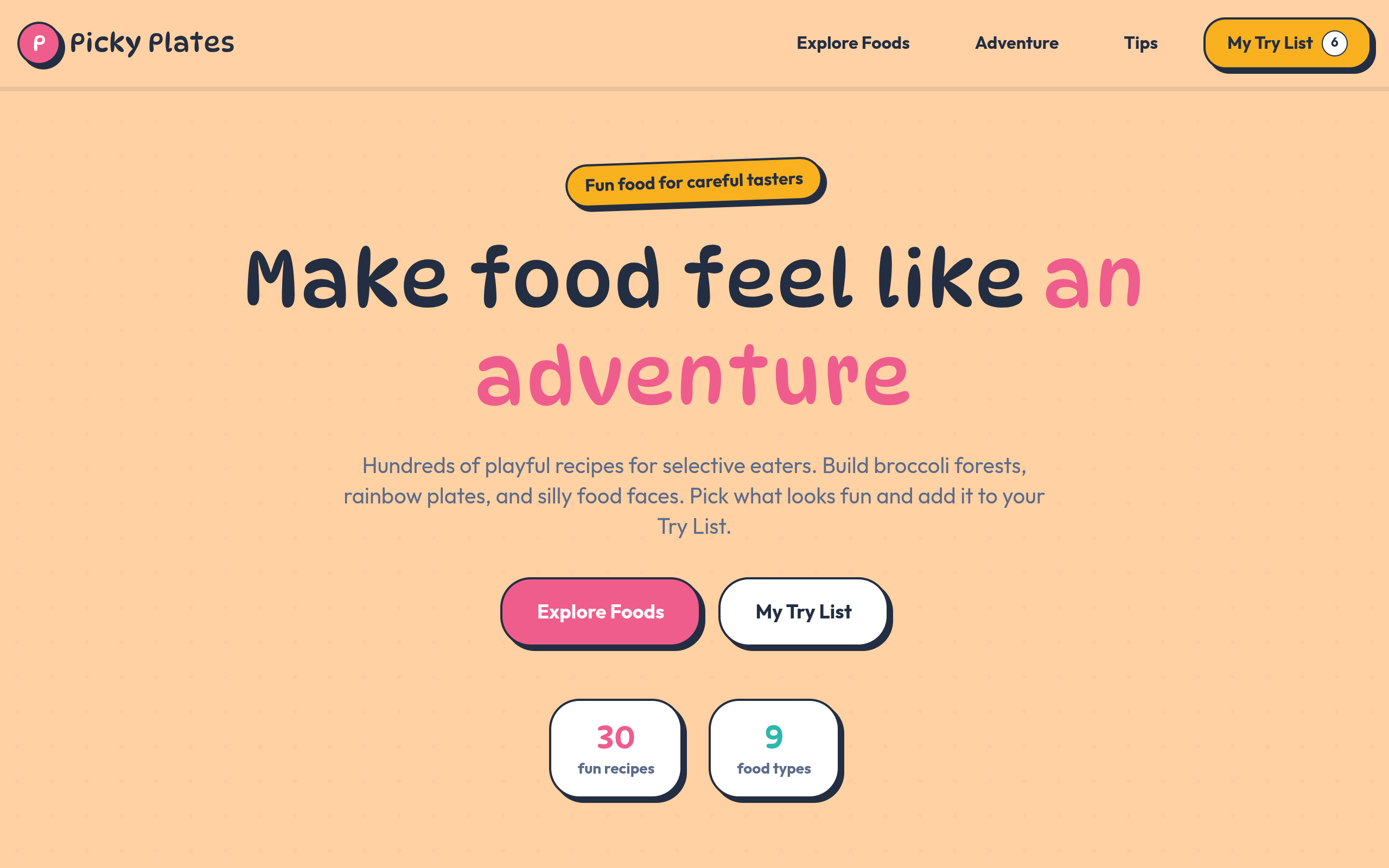
Developing Food Explorer is a free interactive activity that helps children with selective eating habits gradually widen the range of foods they will accept — in a positive, low-pressure way. It was built by a licensed speech-language pathologist and works through fun activities, sensory play, mealtime strategies, and food exploration ideas rather than through bargaining or bribery.
The framing matters: a child is not asked to eat anything. They are invited to explore — to look at a food, describe it, touch it, smell it, and only much later taste it. Every one of those steps is real progress, and treating them that way is what eventually makes tasting possible.
It is written to be used by the adults in a child's life as much as by the child, so parents, caregivers, therapists, and educators all get practical, immediately usable ideas rather than theory.
Why Low Pressure Beats Bribery With Selective Eaters
Pressure at the table backfires with remarkable consistency. "Three more bites," dessert used as leverage, and long negotiations all raise the emotional stakes of eating, and a child who is anxious about food becomes less willing to try it, not more. Families usually arrive at these tactics because they work in the moment — and then find the accepted-foods list has quietly shrunk again.
The alternative most feeding specialists teach is a division of responsibility: the adult decides what food is offered, when, and where; the child decides whether to eat and how much. That split removes the power struggle without removing the exposure, and repeated, no-stakes exposure is what actually shifts acceptance over time.
Sensory play does the same work from another angle. Cautious eaters are frequently reacting to texture, smell, or unfamiliarity rather than to taste, and handling a food away from the pressure of a mealtime lets them get familiar with it long before it has to go anywhere near their mouth.
How to Use It at Home, in Therapy, or in the Classroom
At home, keep sessions short and separate from meals when you can. Explore one food at a time, celebrate the step your child actually took — looked at it, poked it, smelled it — and let that be the win for the day. Do not attach a reward to tasting; that turns the food back into a transaction.
For SLPs and OTs working on feeding, it functions well as structured carryover: pick the activities that match the level your client is currently at on the exposure hierarchy, and send the corresponding strategies home so caregivers are reinforcing the same approach between sessions.
In preschools and classrooms, group food exploration takes advantage of something clinics cannot easily replicate: peer modeling. A cautious eater who watches a friend cheerfully investigate a new food will often try the same thing, with no adult prompting at all.
Who Developing Food Explorer Is Great For
- check_circleFamilies living with a selective eater who are starting to dread mealtimes
- check_circleChildren who will look at a new food but are not ready to taste it yet
- check_circleSLPs and OTs working on pediatric feeding who want parent-friendly carryover ideas
- check_circlePreschool teachers and caregivers navigating snack time with a cautious eater
- check_circleAnyone who wants to lower the temperature at the dinner table before adding anything new