Level Up: Online Speech Therapy Game for Kids
A fast multiple-choice vocabulary game covering synonyms, antonyms, multiple-meaning words, and idioms.
Included with the Pro plan — create an account to get started
Already have an account? Log inHow to Play Level Up
- 1Pick a round: synonyms, antonyms, multiple-meaning words, or idioms.
- 2Read the word or phrase and choose from the multiple-choice answers — feedback is immediate.
- 3Say why the answer is right before moving on. That turns a click into an expressive language task.
- 4Work up through the four skills; the idiom and multiple-meaning rounds are the real challenge for older students.
What Level Up Practices
Is Level Up Right for Us?
| Ages | Ages 7–13 |
|---|---|
| Where it fits | Anywhere |
| Typical session | 5 min |
| Plan | Pro |
| Format | Speech Therapy Game — runs in any browser, nothing to install |
| Skills targeted | Synonyms, Antonyms, Multiple Meanings, Idioms, Vocabulary |
- Students working on expressive and receptive vocabulary goals
- Mixed speech-language groups that need a quick, competitive warm-up
- Home practice between therapy sessions — no printing or prep
- Older elementary and middle-school students who find flashcards babyish
What Is Level Up?
Level Up is a free online vocabulary game designed by a licensed speech-language pathologist. Each round presents a word or phrase and a set of multiple-choice answers, and players work their way up through four core semantic skills: synonyms, antonyms, multiple-meaning words, and idioms.
Because it runs entirely in the browser, there is nothing to print, laminate, or set up. Open it on a tablet, phone, or classroom smartboard and start playing — the multiple-choice format keeps turns short, so it works just as well one-on-one as it does in a small group.
Why Synonyms, Antonyms, Idioms & Multiple Meanings Matter
Semantic flexibility — knowing that words relate to each other, that one word can mean several things, and that some phrases aren't literal at all — is one of the strongest predictors of reading comprehension in the upper elementary years. Students with language delays often plateau exactly here: they can label pictures, but struggle to explain how words connect.
Idioms and multiple-meaning words are also a classic sticking point for literal thinkers, including many autistic students and English-language learners. Practicing them in a low-stakes game format, with immediate feedback, builds the pattern recognition that worksheets rarely achieve.
How to Use Level Up in Therapy or at Home
In a therapy session, Level Up works well as a reinforcer with built-in practice: have the student explain why an answer is correct before accepting it, and you've turned a multiple-choice click into an expressive language task. For group sessions, alternate turns and have peers agree or disagree with each answer.
At home, five to ten minutes a few times a week is plenty. Parents don't need any special training — the game gives feedback on its own, and the multiple-choice format means a child can play independently while still getting meaningful vocabulary exposure.
Included with the Pro plan — create an account to get started
Already have an account? Log inMore Games Like Level Up
Matched on the skills this one targets, so the next thing you open keeps working on the same goal.
 Pro
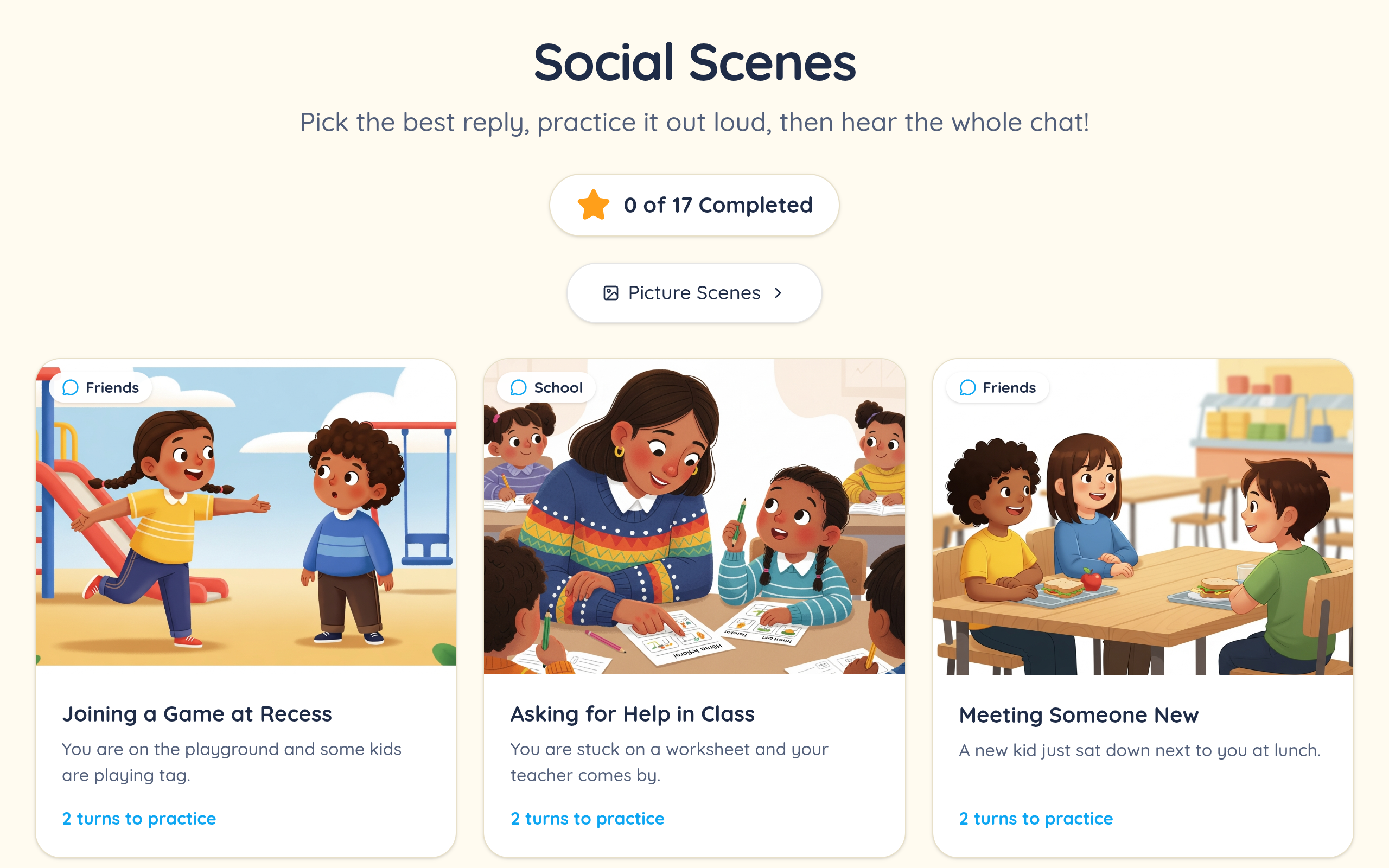
ProSocial Scenes
Ages 6–13Build conversations in everyday social situations — then record yourself and hear exactly how it sounds.
Targets
 Pro
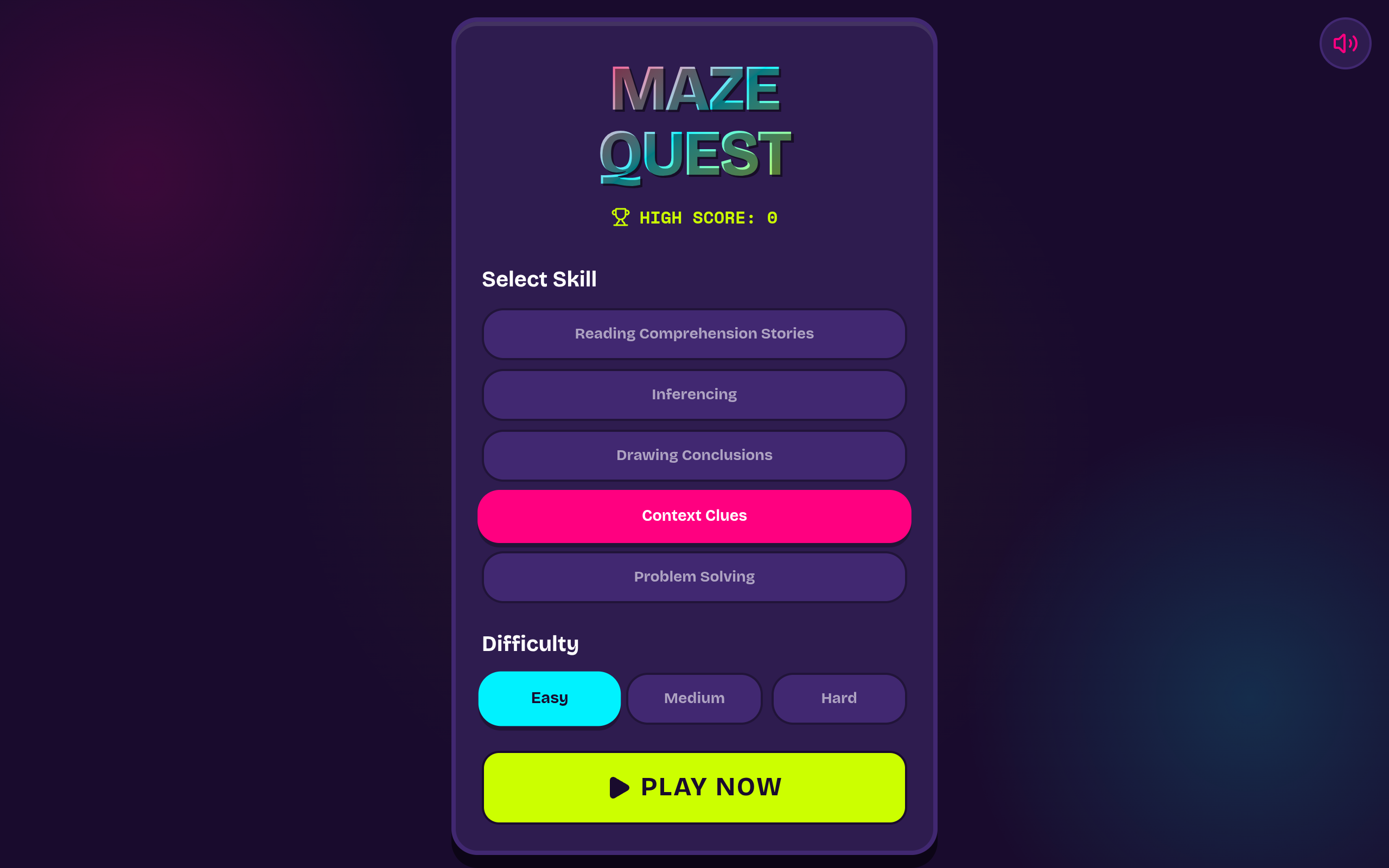
ProMaze Quest
Ages 6–12Solve your way through the maze by answering comprehension and inferencing questions.
Targets
 Pro
ProSocial Spark
Ages 6–13Practice social skills and emotional regulation — and build essential life skills and friendships along the way.
Targets
Frequently Asked Questions
Is Level Up really free to play?
What ages is Level Up best for?
Was this game made by a speech-language pathologist?
Does it work on tablets and phones?
Ready to Play Level Up?
Create an account and upgrade to Pro for unlimited play, progress tracking, and every premium practice activity — pronunciation games, personalized stories, and smart flashcards.
Get Started Free