Social Scenes: Online Speech Therapy Game for Kids
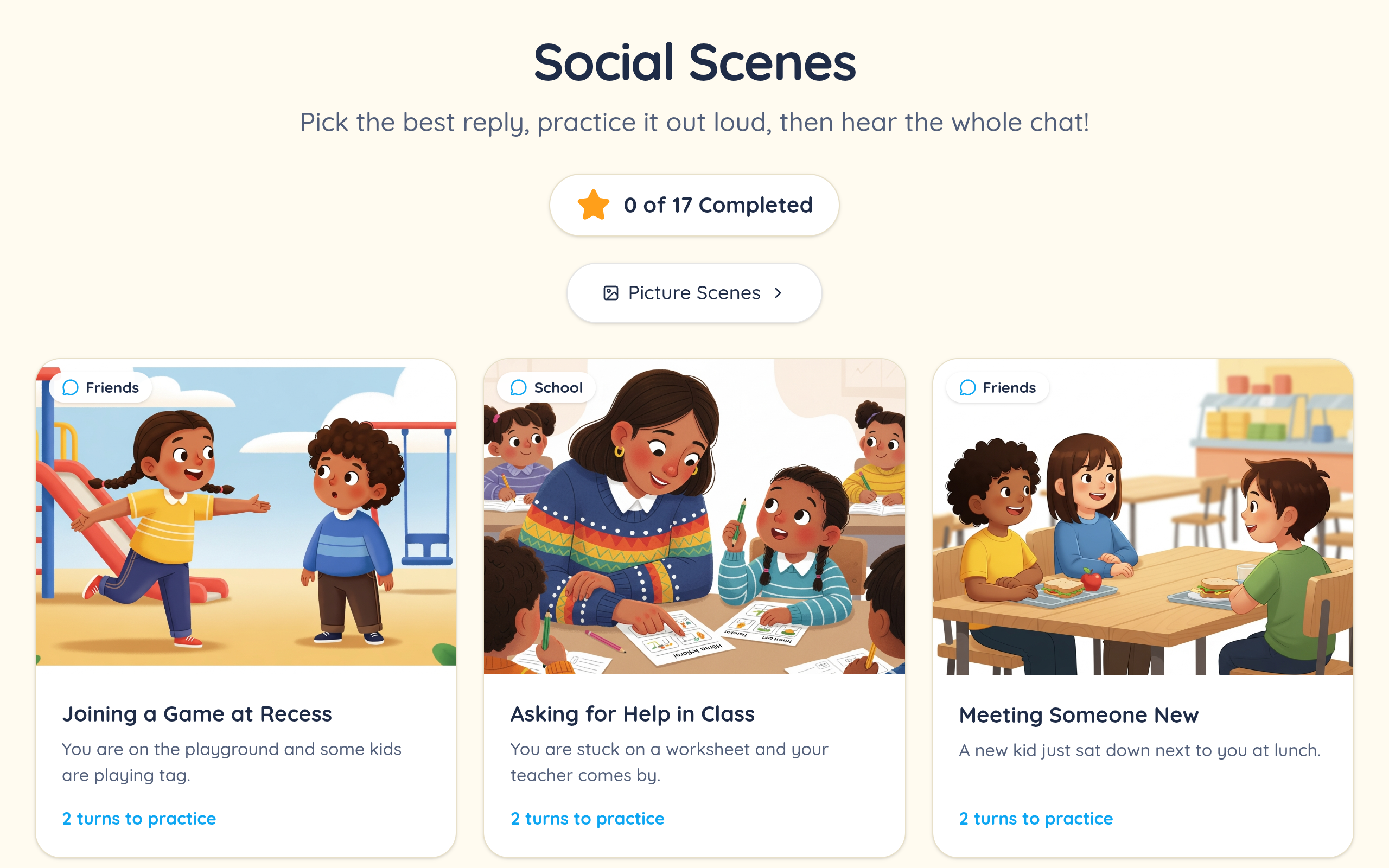
Build conversations in everyday social situations — then record yourself and hear exactly how it sounds.
Included with the Pro plan — create an account to get started
Already have an account? Log inHow to Play Social Scenes
- 1Pick a scene — an everyday situation like joining a group, asking for help, or repairing an exchange that went sideways.
- 2Build the conversation a turn at a time: what you might say first, how the other person could answer, and where it goes from there.
- 3Record your part and play it back, so you hear your own volume, rate, and tone instead of being told about them.
- 4Run the scene again and change exactly one thing. The second recording is the evidence that something improved.
What Social Scenes Practices
Is Social Scenes Right for Us?
| Ages | Ages 6–13 |
|---|---|
| Where it fits | Anywhere |
| Typical session | 15 min |
| Plan | Pro |
| Format | Speech Therapy Game — runs in any browser, nothing to install |
| Skills targeted | Conversation Skills, Social Communication, Self-Monitoring, Expressive Language, Perspective Taking |
- Students with social communication or pragmatic language goals
- Kids who know the rules of conversation but freeze when it is their turn
- Autistic students and students with ADHD who do better when they can rehearse a situation first
- Anyone working on self-monitoring — hearing your own recording is the fastest feedback there is
- Teletherapy and home practice, where recorded responses can be reviewed together afterwards
What Is Social Scenes?
Social Scenes is a free online activity that walks kids through everyday social situations and helps them build the conversation piece by piece — what you might say first, how the other person could respond, and where the exchange goes from there. It was designed by a licensed speech-language pathologist around the pragmatic language goals that appear on real therapy plans.
What separates it from a worksheet is the recording step. Players can record themselves saying their part of the conversation and play it back, which turns an abstract instruction like "say it in a friendly voice" into something a child can actually hear and adjust.
It runs entirely in the browser, so there is nothing to print, laminate, or install. Open it on a tablet, laptop, or phone and start a scene.
Why Conversation Practice Has to Happen Out Loud
Most children with social communication difficulties can tell you the rule. Ask what you should do when a friend is talking and they will say "listen and take turns." The gap is almost never knowledge — it is retrieval under pressure, in a real moment, with a real person waiting for an answer.
That gap closes with rehearsal. Practicing a greeting, a repair like "sorry, what did you say?", or a way to join a group before you need it means the words are already there when the moment arrives. Speech-language pathologists build this deliberately: rehearse the language explicitly, then fade the support until the student is generating it on their own.
Recording adds the self-monitoring layer. Kids are often genuinely surprised by their own volume, rate, or flat intonation the first time they hear a playback — and that surprise changes the behavior faster than an adult pointing it out ever does.
How to Use Social Scenes in Therapy or at Home
In a session, run each scene twice. The first pass is a cold take; then listen back together and pick exactly one thing to change — a little more volume, a question back to the other person, a warmer opener. The second recording gives the student immediate, unarguable evidence that they improved something.
For groups, have students respond to each other: one records their turn, the next records a plausible reply. That turns a solo activity into real turn-taking practice with an audience whose opinion the student actually cares about.
At home, play alongside your child instead of handing off the device. Take a turn yourself — including a deliberately awkward one — so they see that conversations are something everyone practices rather than a test they can fail.
Included with the Pro plan — create an account to get started
Already have an account? Log inMore Games Like Social Scenes
Matched on the skills this one targets, so the next thing you open keeps working on the same goal.
 Pro
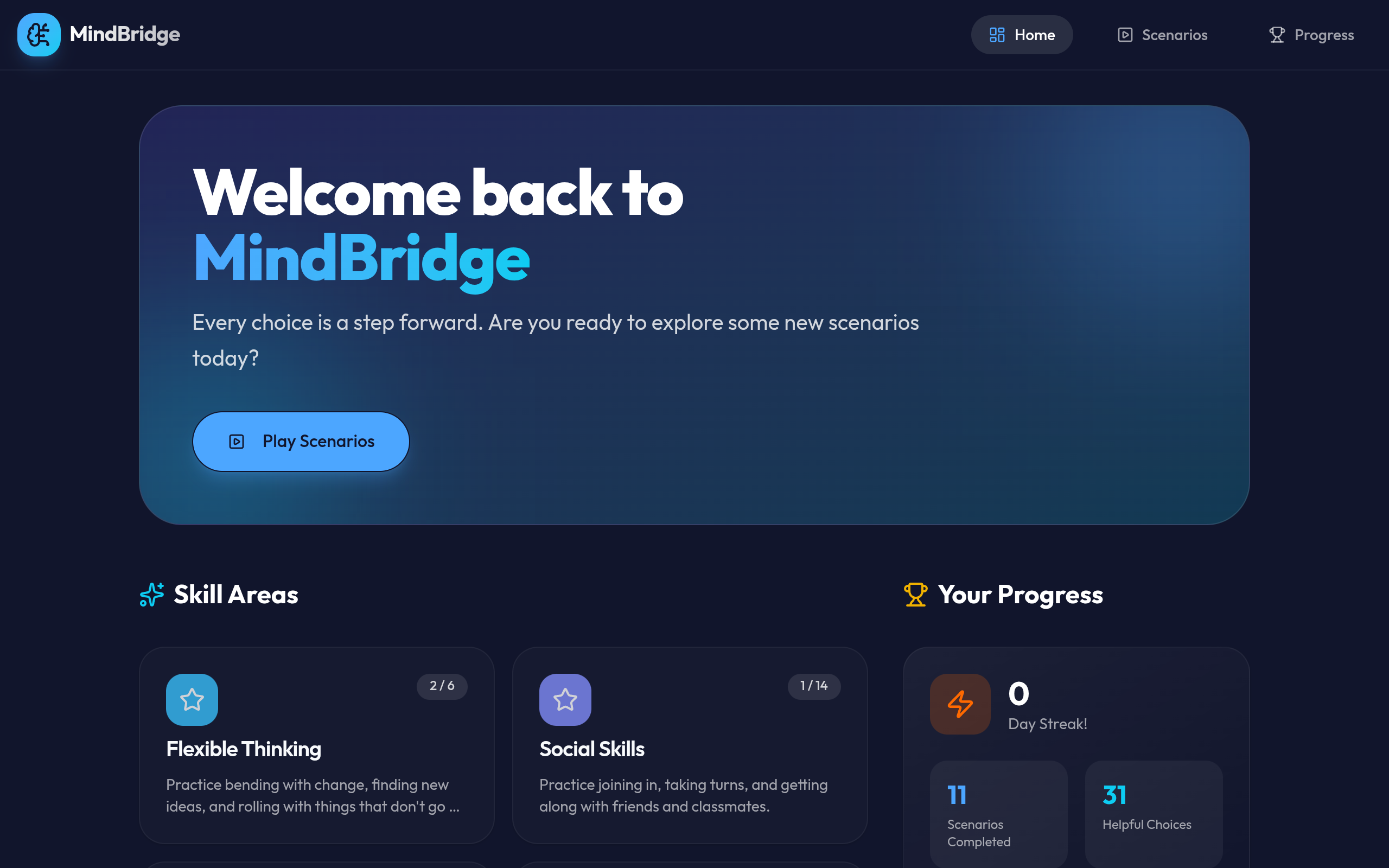
ProSocial Spark
Ages 6–13Practice social skills and emotional regulation — and build essential life skills and friendships along the way.
Targets
 Pro
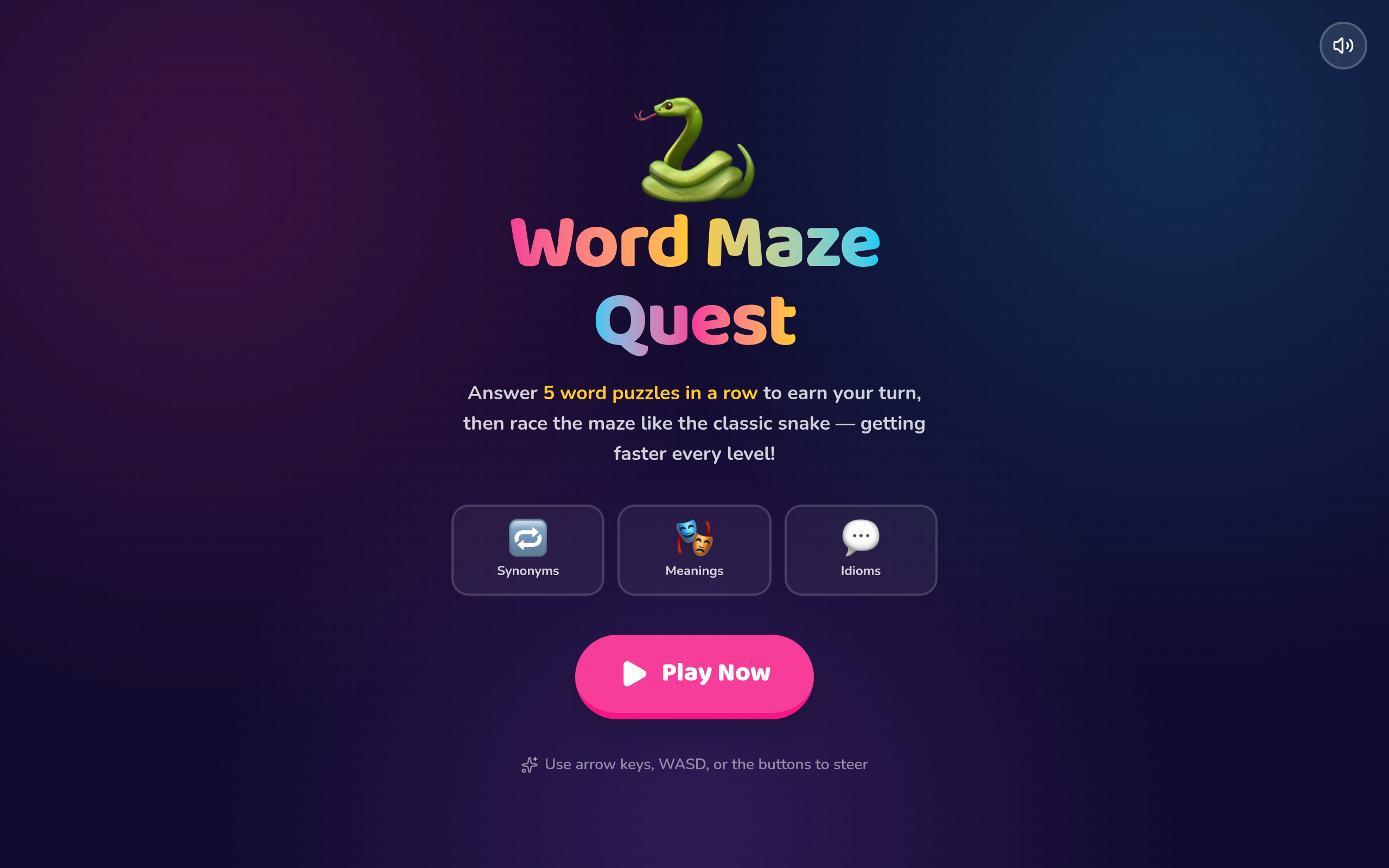
ProLevel Up
Ages 7–13A fast multiple-choice vocabulary game covering synonyms, antonyms, multiple-meaning words, and idioms.
Targets
 Pro
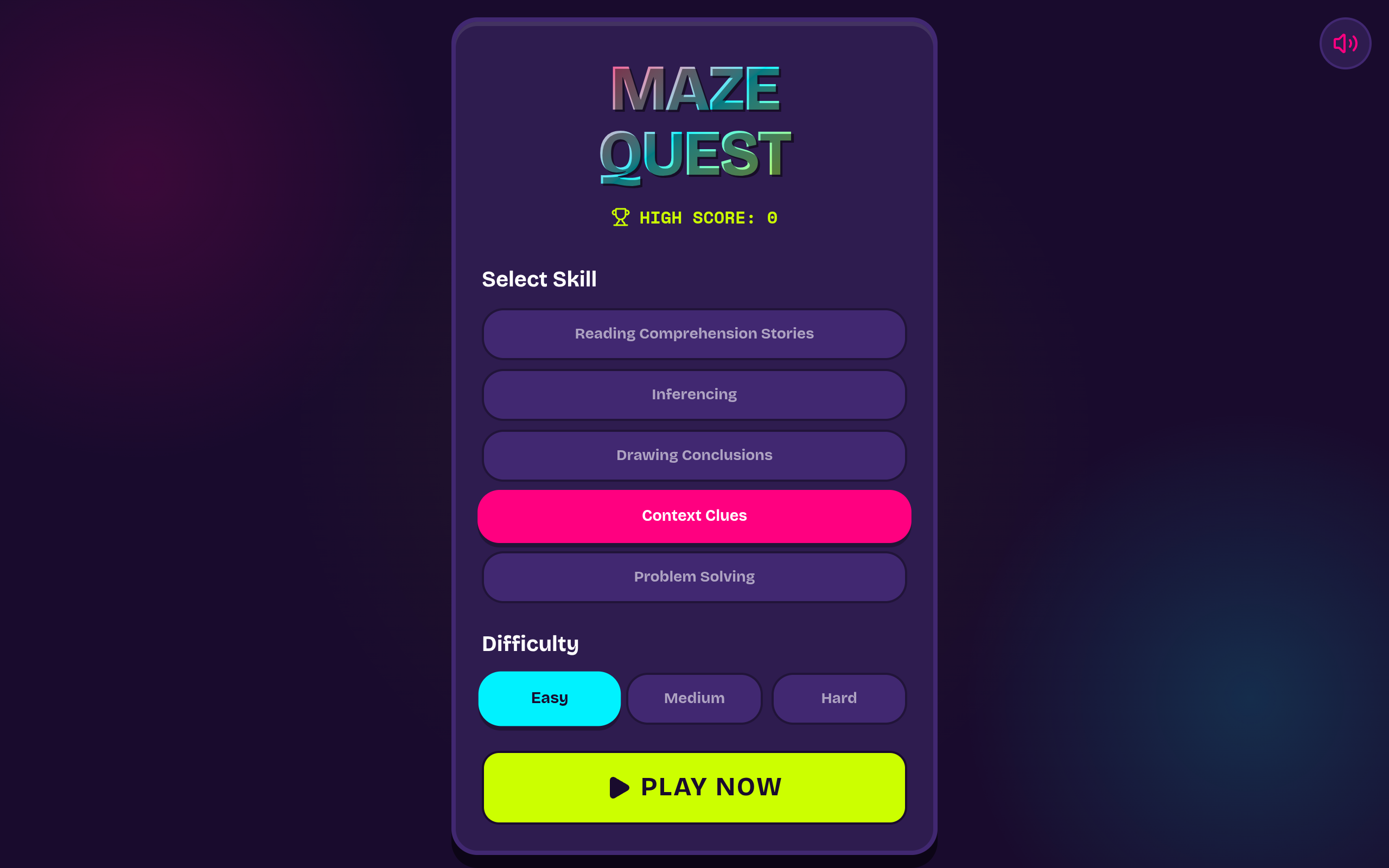
ProMaze Quest
Ages 6–12Solve your way through the maze by answering comprehension and inferencing questions.
Targets
Frequently Asked Questions
Is Social Scenes free to play?
Does my child need a microphone?
What skills does Social Scenes target?
What ages is it best for?
Ready to Play Social Scenes?
Create an account and upgrade to Pro for unlimited play, progress tracking, and every premium practice activity — pronunciation games, personalized stories, and smart flashcards.
Get Started Free