Home practice routine

Speech Therapy Activities at Home

Almost every family that stops practising at home stops for the same reason, and it is not the material. It is that practice had no fixed place in the week, so it competed with homework, dinner, football, and a tired evening — and lost, four times in a row, until nobody mentioned it again.

This page is about the schedule and the setting rather than the technique. Where practice happens, when it happens, what it is attached to, what to do on the evening a child refuses, and how to get the sound out of the practice session and into ordinary talk, which is where it has to end up.The arithmetic is worth seeing once. A weekly therapy session is roughly thirty minutes. Five minutes at home, four evenings a week, is twenty minutes — very nearly doubling your child's total practice time, from something that fits between brushing teeth and a bedtime story. That is why frequency is the lever that matters, and why a routine beats good intentions.

Fitting a Game Into the Time You Have

Read the Session column first: it says whether an activity is a five-minute stop or a fifteen-minute sit-down, which is the whole question on a weeknight. Then check Ages, and pick two or three that fit rather than one — rotation is what keeps a routine from going stale.

Fitting a Game Into the Time You Have
GameWhat it practicesAgesWhere it fitsSessionPlan
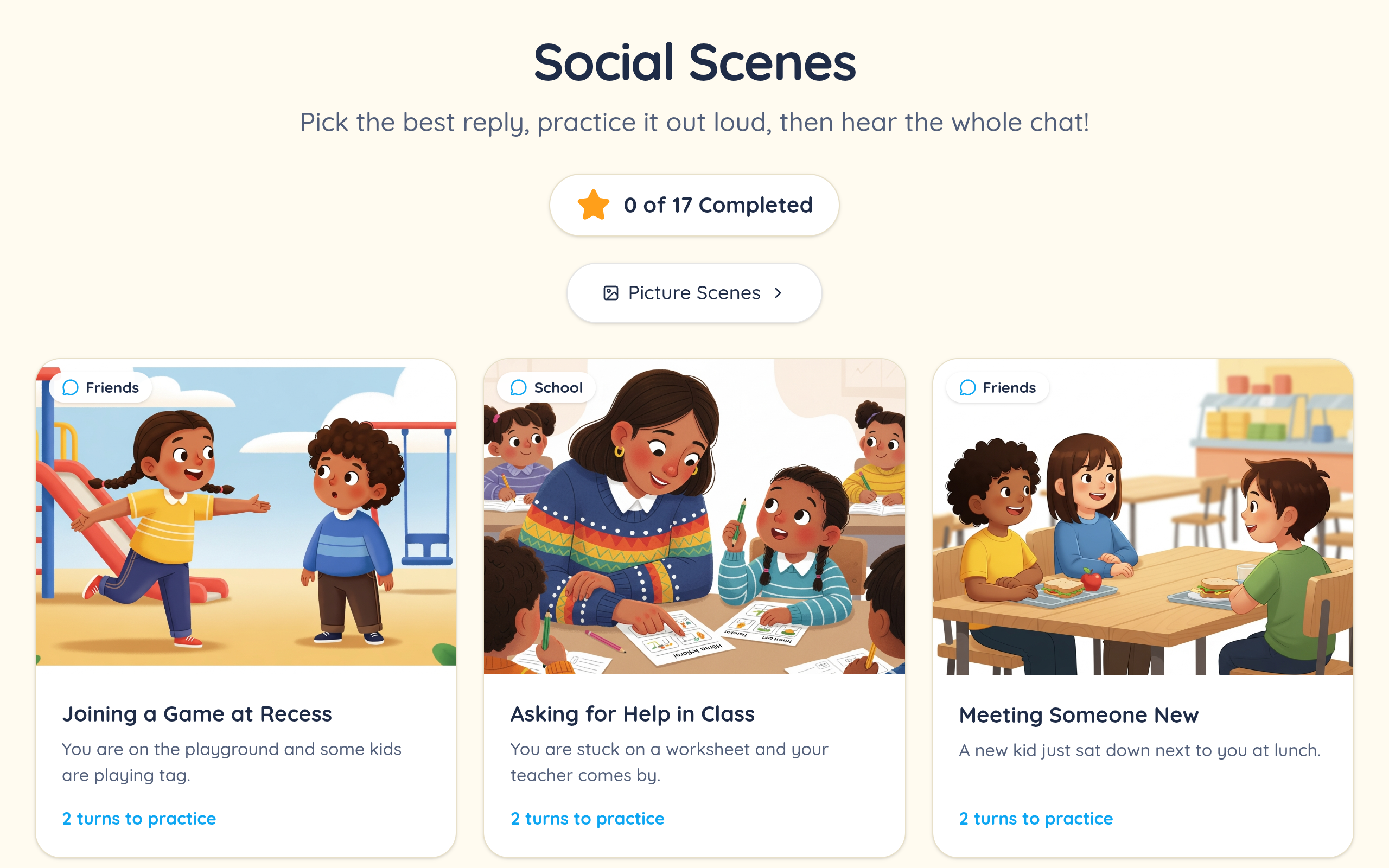
Social ScenesConversation Skills, Social Communication, Self-MonitoringAges 6–13Anywhere15 minPro
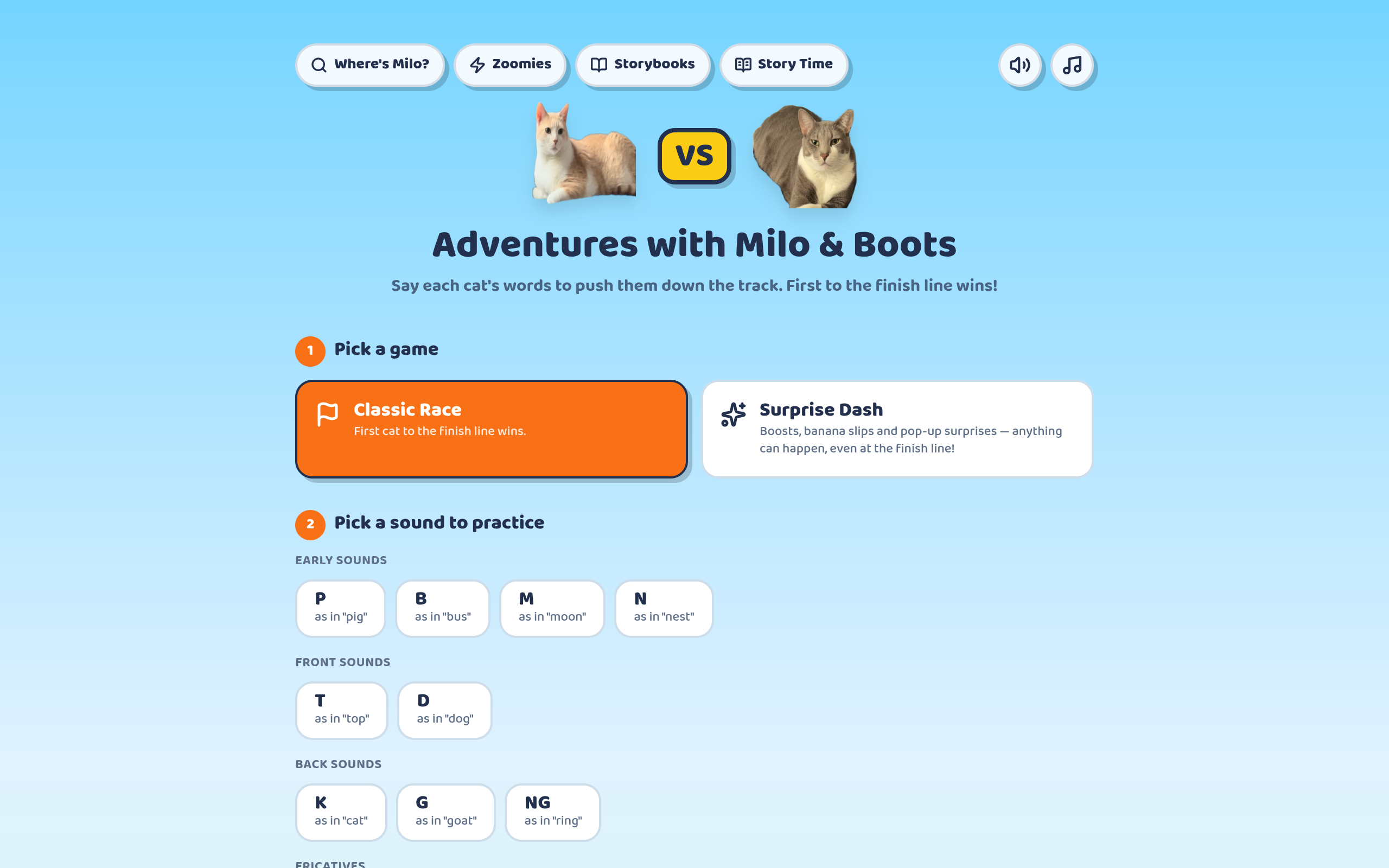
Speech CatsArticulation, Speech Sound Practice, Speech ClarityAges 4–10Anywhere10 minPro
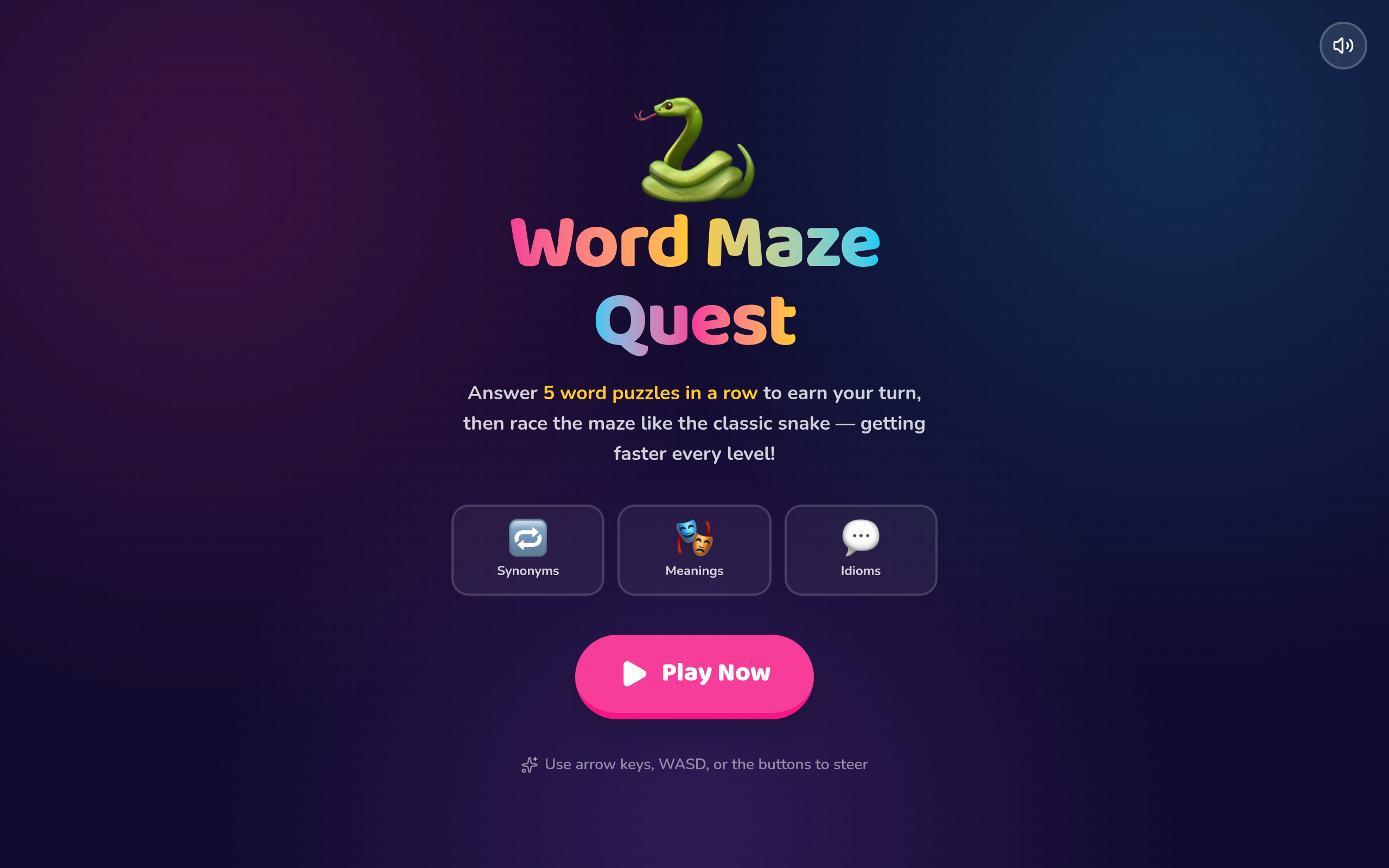
Level UpSynonyms, Antonyms, Multiple MeaningsAges 7–13Anywhere5 minPro
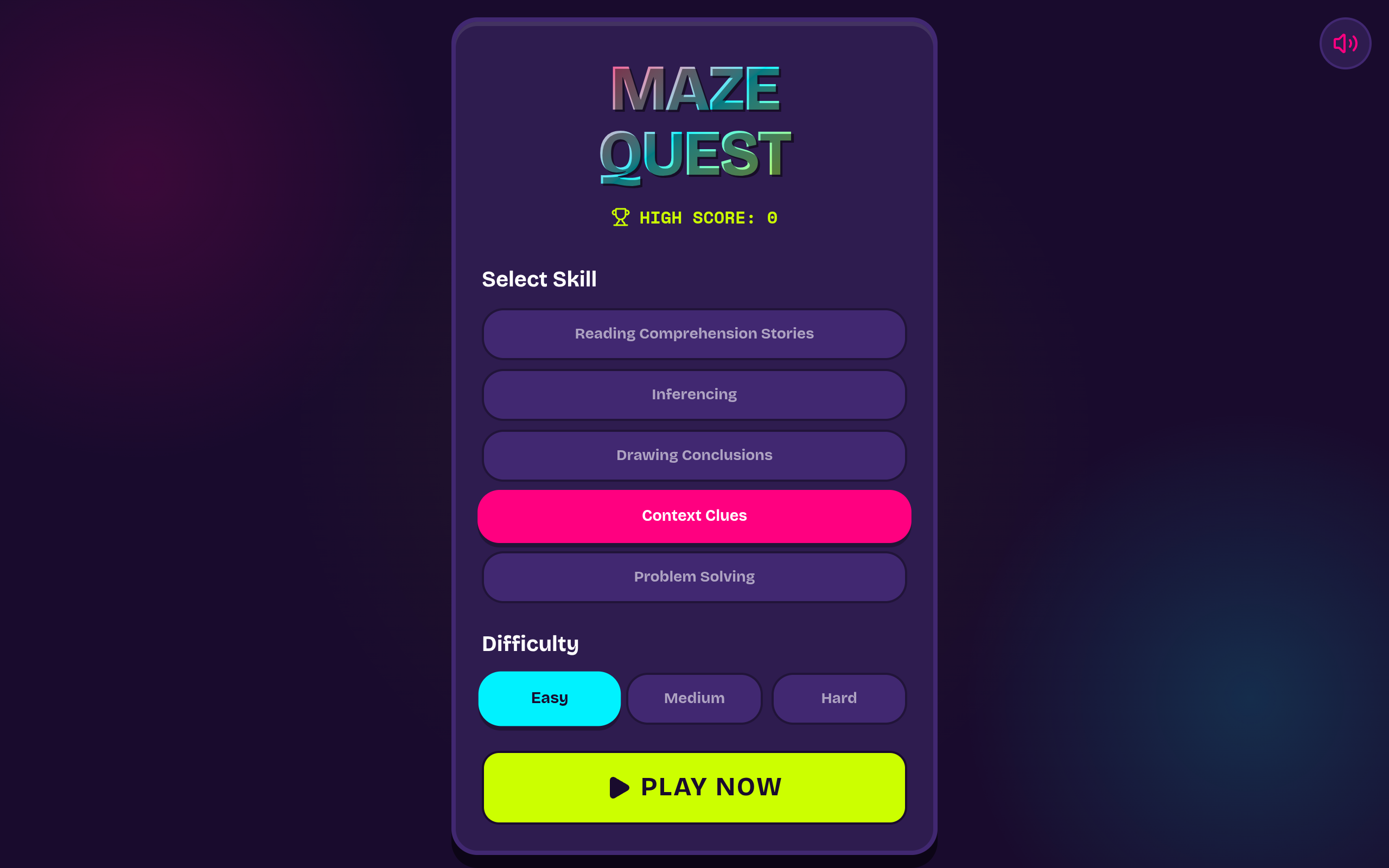
Maze QuestComprehension, Inferencing, ReasoningAges 6–12Anywhere10 minPro
Social SparkSocial Skills, Emotional Regulation, Perspective TakingAges 6–13Anywhere10 minPro

“Session” is a typical sitting, not a level length — none of these games end on their own. A dash means we have not published that detail for a game yet rather than that it does not apply.

How Kids Practice With These Games

  • Repetitions without the fight

    Progress in speech and language runs on volume of practice. A ten-minute game produces dozens of engaged responses where a worksheet produces a handful of reluctant ones — the target is identical, the willingness is not.

  • Built around real therapy goals

    Every game is developed by our team with our clinical lead, a licensed speech-language pathologist, against the targets that appear on IEPs and treatment plans: articulation, vocabulary, comprehension, following directions, and pragmatic language.

  • Nothing to install or print

    They run in any browser, on a phone, tablet, Chromebook, laptop, or classroom smartboard, and they are built touch-first — so the iPad on the sofa and the cart in the school library behave the same way.

  • Practice out loud, not just tapping

    Several games ask the child to say the word or record their answer and play it back. Hearing your own production is the fastest feedback there is, and it is the part a printable can never do.

  • Practice that gets recorded

    An account keeps a history of what was practised across every activity on the site, so "has this actually helped?" has an answer that is not a memory. Trends and sound mastery over time are Pro features.

  • No ads, and no accounts for children

    Games sit behind a login, so they are not in ad networks and not open to the web. A parent, therapist, or teacher holds the account and the data — children never make one themselves.

Five Minutes Often Beats an Hour on Sunday

Skills that need to become automatic respond to spaced repetition, not to volume in one sitting. Four short sessions across a week produce more usable change than one long session containing the same total minutes, because each restart forces retrieval and because a child's attention is only good for the first stretch anyway.

There is also a practical argument. A five-minute commitment gets started on an evening when a thirty-minute one gets postponed, and started beats scheduled every time. Set the bar low enough that the tired version of you still clears it.

Stopping early is a technique, not a failure. Ending while your child is still enjoying it is what makes tomorrow's session easy to start; grinding through the last two minutes of a session that has gone flat is what makes them refuse on Thursday.

Attach It to Something That Already Happens

A new habit that depends on remembering will not survive a busy fortnight. One that is anchored to an existing routine will, because the anchor does the remembering — after teeth are brushed, in the car on the way back from school, while dinner is in the oven, before the tablet gets unlocked in the evening.

Pick one anchor and keep it. Practice that happens at a different time every day is really four decisions a week about when to practise, and each of those decisions can be lost. The same slot, the same chair, and the same device removes the negotiation entirely.

The car deserves a specific mention: it is a fixed, screen-limited stretch of time with a captive audience and no competing activity, which makes it one of the best carryover windows most families have. It is not a place for a tablet game, but it is an excellent place for word practice, silly-sentence games, and I-spy loaded with the target sound.

The Evening They Refuse

Every family hits this. Refusal is usually about the demand rather than the activity, so the first move is to shrink it — “three words and we're done” is a deal a six-year-old will often take, and three words is genuinely worth having.

Handing over some control helps more than persuasion does. Let them choose which game, choose how many turns, or take a turn as the one who judges whether you said it right. A child who has decided something about the session is far less likely to fight the session.

And if it is still no, stop. One skipped evening costs almost nothing; a fight over practice costs you the next month, because a child who associates practice with conflict will resist it every time. Come back tomorrow at the anchor point and carry on as though nothing happened. If refusal lasts more than a week or two, tell the SLP — that is a useful clinical signal, not a report on your parenting.

Carryover Is Where the Sound Actually Lands

A sound that is correct in a practice game and wrong at dinner has not generalised yet, and generalisation is the goal — nobody's aim is a child who can say S in an app. The gap closes with practice in ordinary conversation, which means practice outside the five minutes.

The usual method is a short, agreed window rather than all-day monitoring. Pick a stretch — the walk home, the meal, one book at bedtime — where your child knows they are using their good sound, and let the rest of the day be unmonitored. Ten minutes of deliberate speech beats an hour of being watched, and it protects the rest of the day from feeling like a test.

Notice the successes out loud. “I heard that R” costs nothing and does more than a correction; a child who is being caught getting it right will try it again. That is the point at which the practice game has done its job and the routine can start winding down.

Frequently Asked Questions

How often should we practise speech at home?
Five to ten minutes, three to five times a week, is a realistic and effective target. Frequency matters more than the length of any one session — four short evenings beat one long weekend sitting containing the same minutes.
What if we miss a week?
Start again at your usual anchor point and do not try to make up the lost sessions. A missed week is a normal part of a year of practice; treating it as a failure is the thing that usually ends the routine for good.
Where is the best place to practise at home?
Somewhere consistent, reasonably quiet, and free of a television. The specific room matters far less than using the same one every time, because the place becomes part of the cue. The car is an excellent second slot for talking practice that needs no screen.
Do we need a microphone or a quiet room?
Only the recording and pronunciation-scoring activities use a microphone, and the built-in mic on a phone, tablet, or laptop is fine — background noise matters more than the hardware, so turn the television off. The rest of the games are tap-and-play and work anywhere.
Can home practice happen without a screen?
Yes, and some of it should. Word lists in the car, a target sound during a bedtime book, and I-spy loaded with the sound all count, and carryover into ordinary conversation cannot happen on a screen by definition. Printable worksheets cover the paper version.

Pick Your Anchor This Week

Create a free account, choose one slot in the day, and start with five minutes. No credit card required.

Get Started Free

Start free • No credit card required