Pragmatic language

Social Skills and Pragmatic Language Games

Social communication is the use half of language. A child can have a large vocabulary, clean grammar, and perfect articulation, and still lose every conversation they are in — because they open with the wrong thing, hold a topic past the point anyone else is interested, miss the moment a listener has stopped following, and have no move for repairing it. That set of skills has its own name, pragmatics, and its own place on a therapy plan.

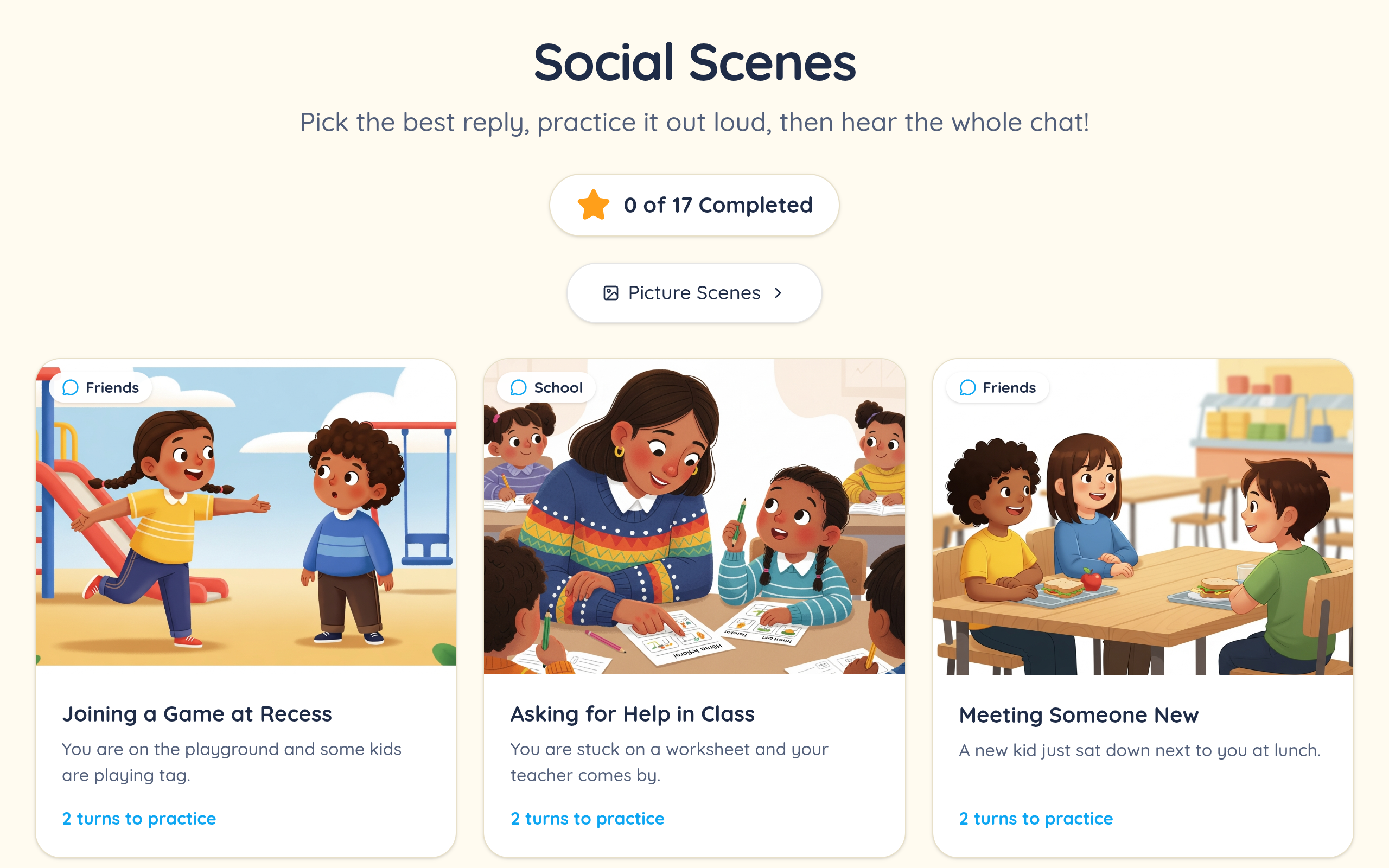
The usual clinical framing splits it three ways: using language for different purposes (greeting, requesting, refusing, informing, joking), changing language for the listener and situation (how you talk to a teacher versus a four-year-old), and following the unwritten rules of an exchange (turn-taking, staying on topic, standing the right distance away, knowing how to enter and leave a conversation). Most goals you will see written are a version of one of those three.It is also the goal area least suited to a worksheet, because the skill only exists in an exchange. Social Scenes and Social Spark are our two games here, and both put the child inside a situation rather than asking them to label one on a page.

Playable in any browser

Compare the social communication games

Compare on Session and "What it practices". Social work needs enough time for a scenario to play out and be talked about afterwards, so a five-minute activity and a fifteen-minute one are doing genuinely different jobs here.

Compare the social communication games
GameWhat it practicesAgesWhere it fitsSessionPlan
Social ScenesConversation Skills, Social Communication, Self-MonitoringAges 6–13Anywhere15 minPro
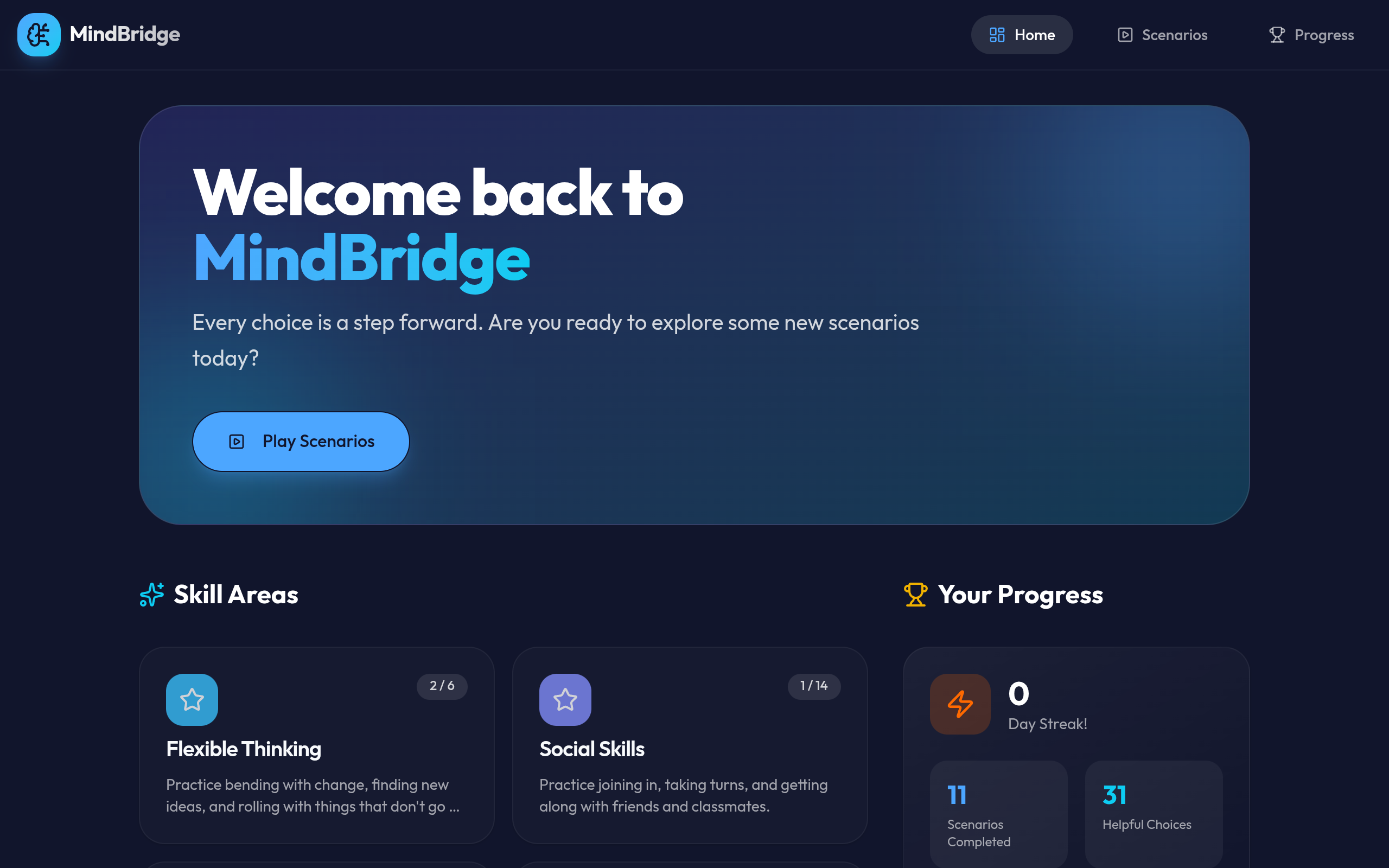
Social SparkSocial Skills, Emotional Regulation, Perspective TakingAges 6–13Anywhere10 minPro

“Session” is a typical sitting, not a level length — none of these games end on their own. A dash means we have not published that detail for a game yet rather than that it does not apply.

How Kids Practice With These Games

  • Repetitions without the fight

    Progress in speech and language runs on volume of practice. A ten-minute game produces dozens of engaged responses where a worksheet produces a handful of reluctant ones — the target is identical, the willingness is not.

  • Built around real therapy goals

    Every game is developed by our team with our clinical lead, a licensed speech-language pathologist, against the targets that appear on IEPs and treatment plans: articulation, vocabulary, comprehension, following directions, and pragmatic language.

  • Nothing to install or print

    They run in any browser, on a phone, tablet, Chromebook, laptop, or classroom smartboard, and they are built touch-first — so the iPad on the sofa and the cart in the school library behave the same way.

  • Practice out loud, not just tapping

    Several games ask the child to say the word or record their answer and play it back. Hearing your own production is the fastest feedback there is, and it is the part a printable can never do.

  • Practice that gets recorded

    An account keeps a history of what was practised across every activity on the site, so "has this actually helped?" has an answer that is not a memory. Trends and sound mastery over time are Pro features.

  • No ads, and no accounts for children

    Games sit behind a login, so they are not in ad networks and not open to the web. A parent, therapist, or teacher holds the account and the data — children never make one themselves.

What Pragmatic Language Covers

Conversation is the visible part: starting one, taking turns, staying on topic, and ending it without walking away mid-sentence. Underneath sits perspective taking — modelling what the other person knows, wants, and is feeling — which is what makes it possible to judge how much background a listener needs and whether a joke will land.

Conversational repair is the skill most worth targeting and the one most often left out. Everybody is misunderstood constantly; the difference is whether a child notices and has a move. Saying "I mean the one from yesterday", asking "do you know what I'm talking about?", or simply starting again is a small repertoire that changes how successful a child is far more than knowing to make eye contact does.

Non-verbal signals are part of the same system: facial expression, tone, proximity, and the gap that means it is your turn. Reading them and producing them both matter, and a child can be strong at one and weak at the other.

Why This Is Hard to Practise on Paper

A worksheet asking which face is angry tests recognition in ideal conditions: one face, no time pressure, no competing information, nothing at stake. The real task is reading a partly-turned face while also tracking what was said, deciding what to say back, and doing it inside a two-second window. The gap between those two is where most social skills instruction quietly fails to transfer.

What narrows the gap is anything interactive: role play, video, recording and reviewing, and scenarios where a choice has a consequence. Recording a child's own attempt and playing it back is unusually powerful with older students, because judging your own recording is a much easier skill to acquire than judging yourself live.

Groups are an advantage rather than a compromise here. Social communication is the one goal area where having three other students in the room is the material, and where the students not taking a turn can be given something genuinely useful to do — agree or disagree with what was said, and explain why.

A Note on Autistic Students

A great deal of social skills material was written to make autistic children look less autistic — forced eye contact, quiet hands, scripts for appearing interested. That is worth naming, because the outcome it produces is masking, and masking is exhausting and linked to poor mental health outcomes in adolescence and adulthood.

The version worth teaching is the one that serves the child: being understood, getting needs met, repairing a misunderstanding, recognising when you have lost your listener, and being able to say what you need. Those are functional goals with a clear benefit to the person doing them, and none of them require anyone to stop being themselves.

It is also worth remembering that a communication breakdown between an autistic and a non-autistic person is a two-way event. The practical implication for therapy is to teach the flexible skills — repair, self-advocacy, asking for clarification — and to be sceptical of any goal whose real purpose is making a child easier for adults.

Running It in a Session and at Home

Debrief afterwards, not during. Correcting a social move in the middle of an exchange stops the exchange, and the child learns that talking to you is a graded activity. Let it run, then talk about it — "what do you think she thought when you said that?" — which is also perspective taking practice in its own right.

The natural moments beat the planned ones. Ordering food, a phone call to a grandparent, asking a shop assistant where something is: each is a complete social exchange with real stakes and a real outcome, and rehearsing one beforehand and reviewing it afterwards is a full therapy cycle that costs nothing.

For older students, make them a party to the decision. Adolescents mostly do not practise because an adult asked, and asking what they would want to be easier gets further in a term than a curriculum does.

Frequently Asked Questions

What is pragmatic language?
The social use of language — using it for different purposes, adapting it to the listener and situation, and following the unwritten rules of conversation like turn-taking, topic maintenance, and personal space. It is separate from vocabulary and grammar, and a child can be strong in those and weak here.
What is the difference between social skills and social communication?
Largely framing. "Social skills" is the everyday term and often covers behaviour; social communication is the language-focused version an SLP works on — how language is used in an exchange. The overlap is large, and pragmatic language is the clinical name you will see on a plan.
Are social skills games appropriate for autistic children?
It depends entirely on what is being taught. Skills that serve the child — repairing a misunderstanding, asking for clarification, saying what you need — are worth having. Goals whose real purpose is making a child appear less autistic teach masking, which carries a real cost, and we would steer away from them.
What age do social communication goals start?
Early forms — turn-taking, joint attention, greeting — are worked on in the preschool years. Explicit conversation, perspective taking, and repair goals are most common from about age six upwards, and our two social games are aimed at ages 6 to 13.
Can social communication be taught in a group?
It is usually better in a group, because the skill exists in an exchange and a group supplies the exchange. Give the students who are not taking a turn a job — agree or disagree with what was said and say why — and everyone in the room is practising.

Try a Social Scenario

Create a free account and play both social communication games. No credit card required.

Get Started Free

Start free • No credit card required