Sounds Arrive on a Schedule
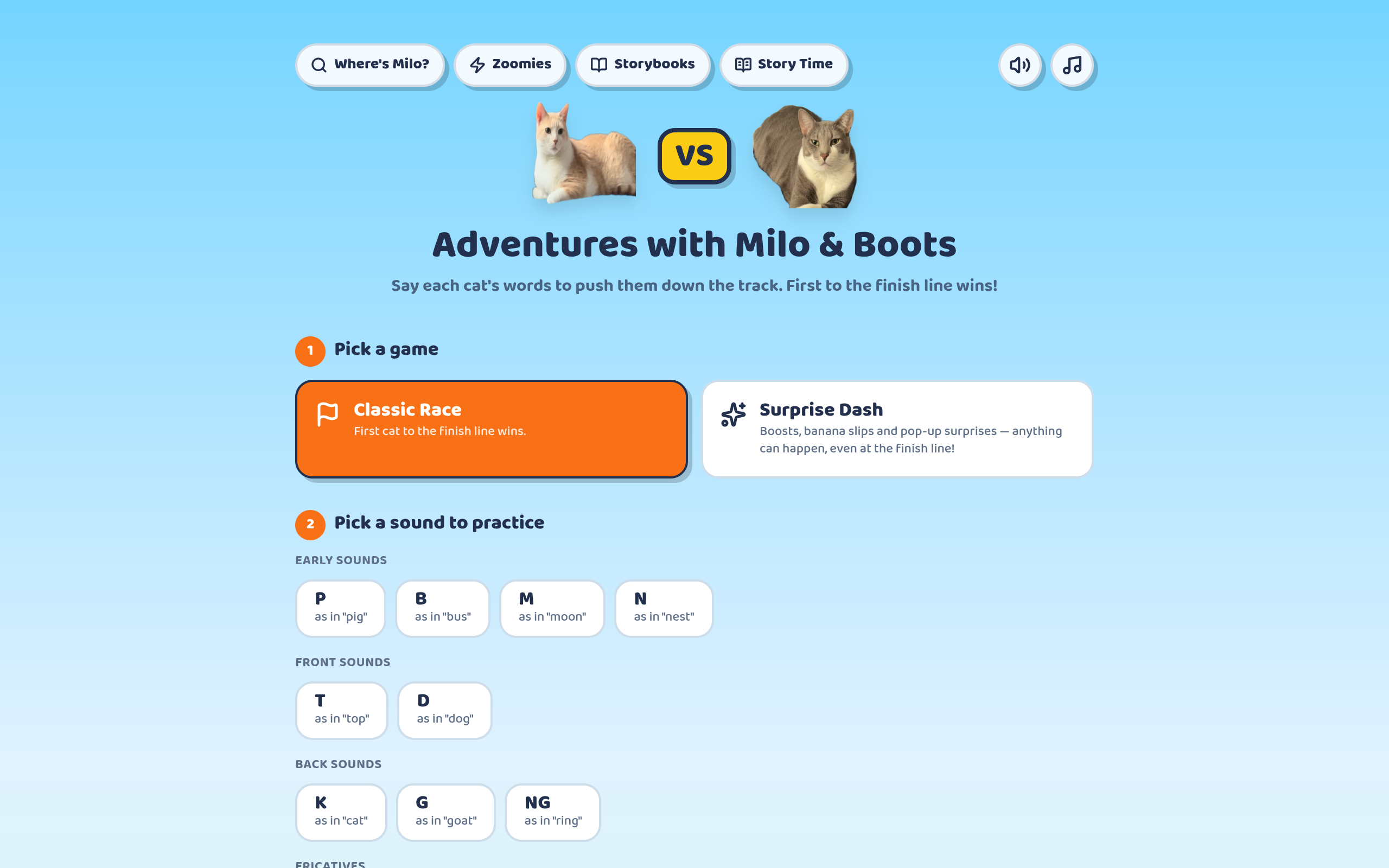
Speech sounds do not all appear at once. P, B, M, N and similar early sounds are usually in place by three; K, G, F and SH follow; and R, S, Z, L and TH are frequently still settling at six, seven or eight. A five-year-old saying "wabbit" is on an ordinary timetable, which is why knowing the schedule matters before deciding anything is wrong.
That schedule is also the argument for choosing targets deliberately rather than working on whatever is most noticeable. An earlier-developing sound that is still wrong is usually both easier to shift and more damaging to how well a child is understood, which makes it the better place to start.
Our speech sound development chart lays out the full timetable, and each sound page above gives the typical mastery age for that sound alongside the practice words.
Position Changes the Difficulty
The same sound is not equally hard everywhere in a word. Most children find a sound easiest at the start, harder in the middle, and hardest at the end — which is why therapy usually establishes one position before moving to the next rather than practising all three at once.
Every sound page here splits its practice words the same way, and the full lists on the sound guides go further, breaking each position out into its own page with a longer word bank behind it.
Every Consonant, Including the Quiet Ones
All 24 English consonants have a page here, and they are not all equally worth a game. /H/ has no tongue or lip position to learn and is almost never a goal on its own. /ZH/, the buzz in "measure", is the rarest consonant in the language and usually arrives by itself once /SH/ is solid. /D/ and /T/ are early and everywhere, and are far more often the place another sound's error lands — "do" for "go", "dis" for "this" — than targets in their own right.
We publish those pages anyway, and say all of that on them. A parent searching for "H sound games" deserves the real answer, which is that the sound is rarely the problem and what usually matters is the wider pattern it sits inside. That is more useful than a page pretending every consonant needs drilling, and it is a great deal more useful than no page at all.
Vowels and diphthongs are a genuinely different case, not a harsher application of the same judgement. The 11 vowels and 5 diphthongs have full guides and word lists in the sound library, but a vowel error is usually one part of a wider speech pattern rather than a single target to drill. Consonant blends — /ST/, /BL/, /STR/ — are a third case again: two consonants coordinated back to back, practised by way of the single sounds inside them, which are all right here.