Tweens and young teens

Social Skills Games for Teens and Tweens

Social Spark is our pick for older students. Many of its 51 scenarios are set in middle-school life: a mess in the group chat, seeing a party you weren't invited to on someone's story, being corrected in front of the class, two minutes before you present. Each is a short clip, a discussion prompt and the question of what would help.

7 days free • No card needed • Then $9.99/month or $79.99/year

  • Listed for ages 6 to 13; the later scenarios are written for the top of that range
  • Works on a student's own phone or a shared screen
  • For students past 13, check the fit during the free trial before you plan around it
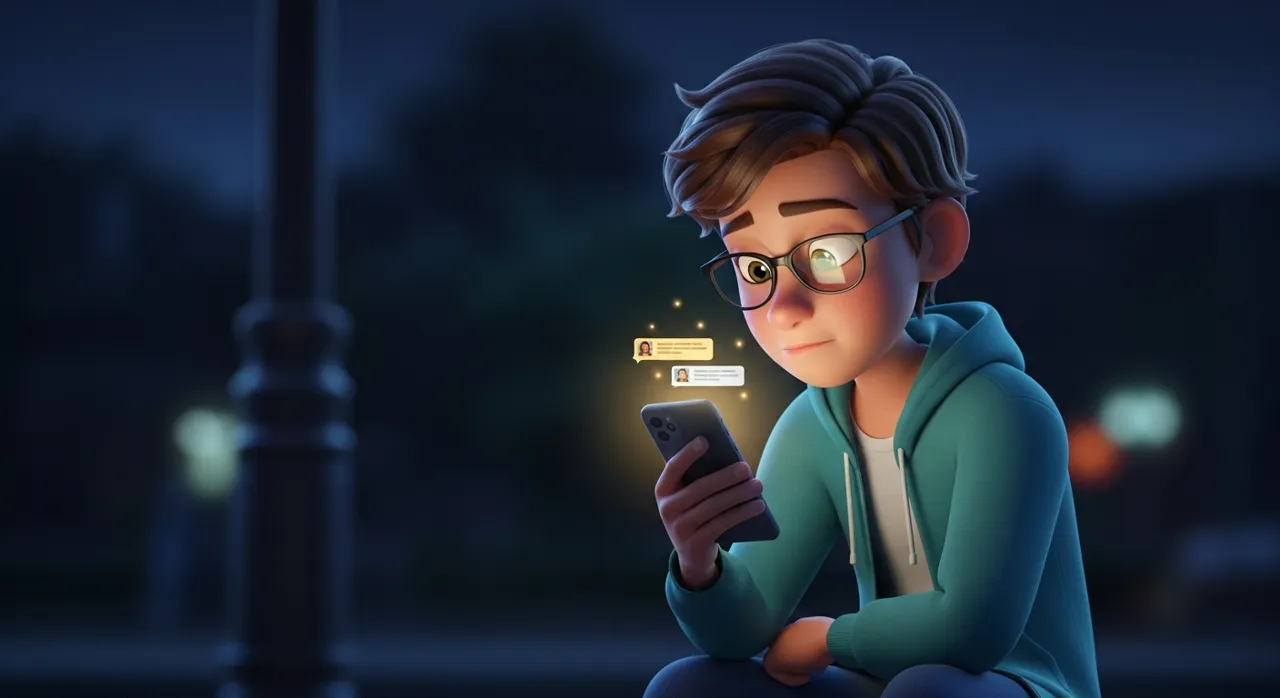
Social Spark scenario: the group chat mess
The Group Chat Mess
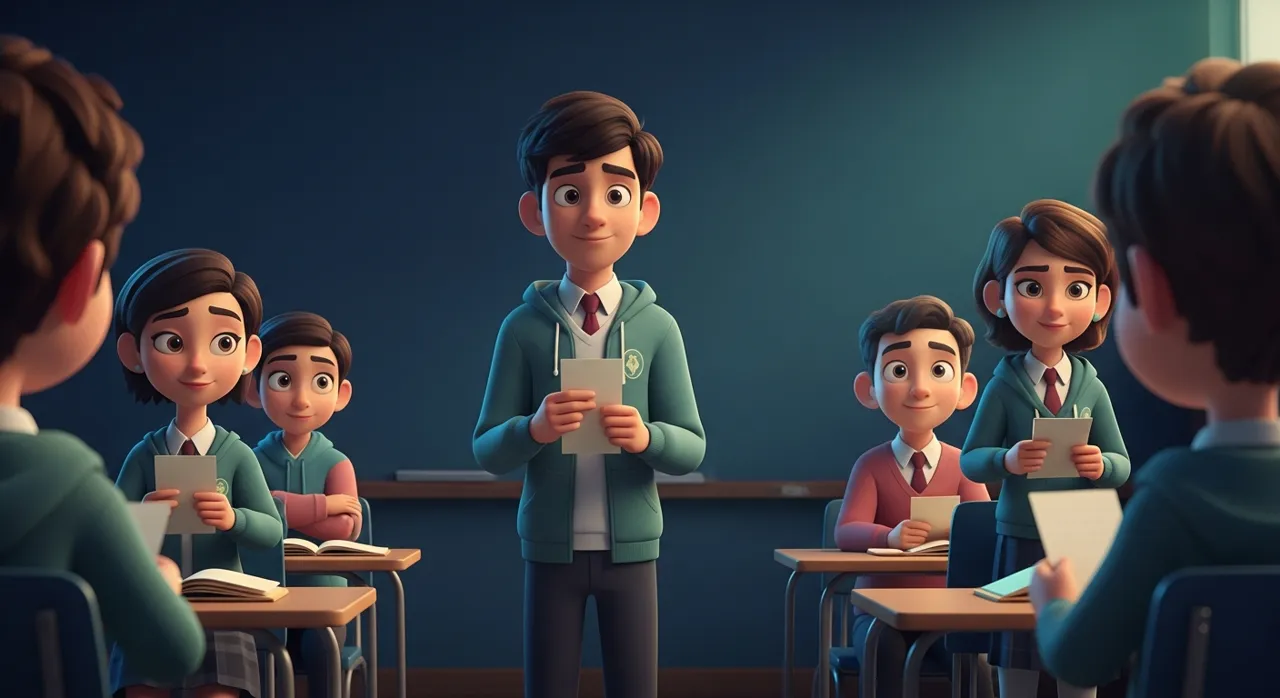
Social Spark scenario: two minutes before you present
Before a presentation
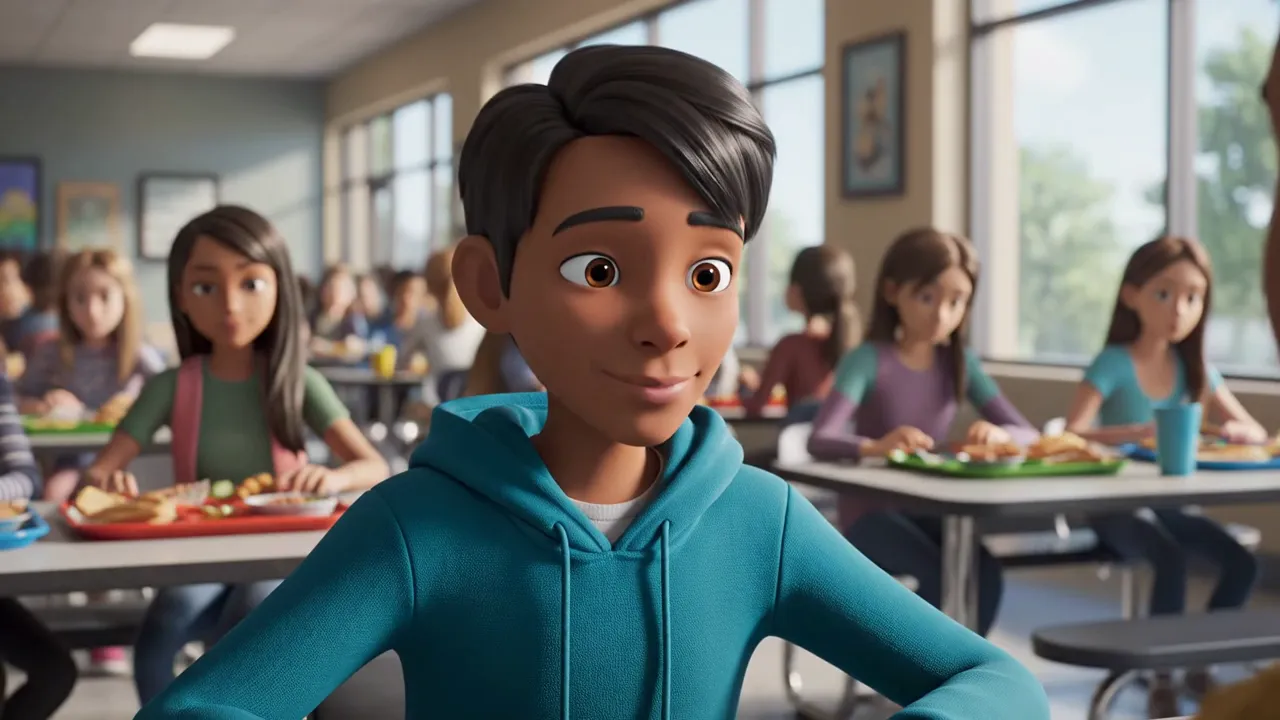
Social Spark scenario: when the joke isn't funny to them
Perspective taking
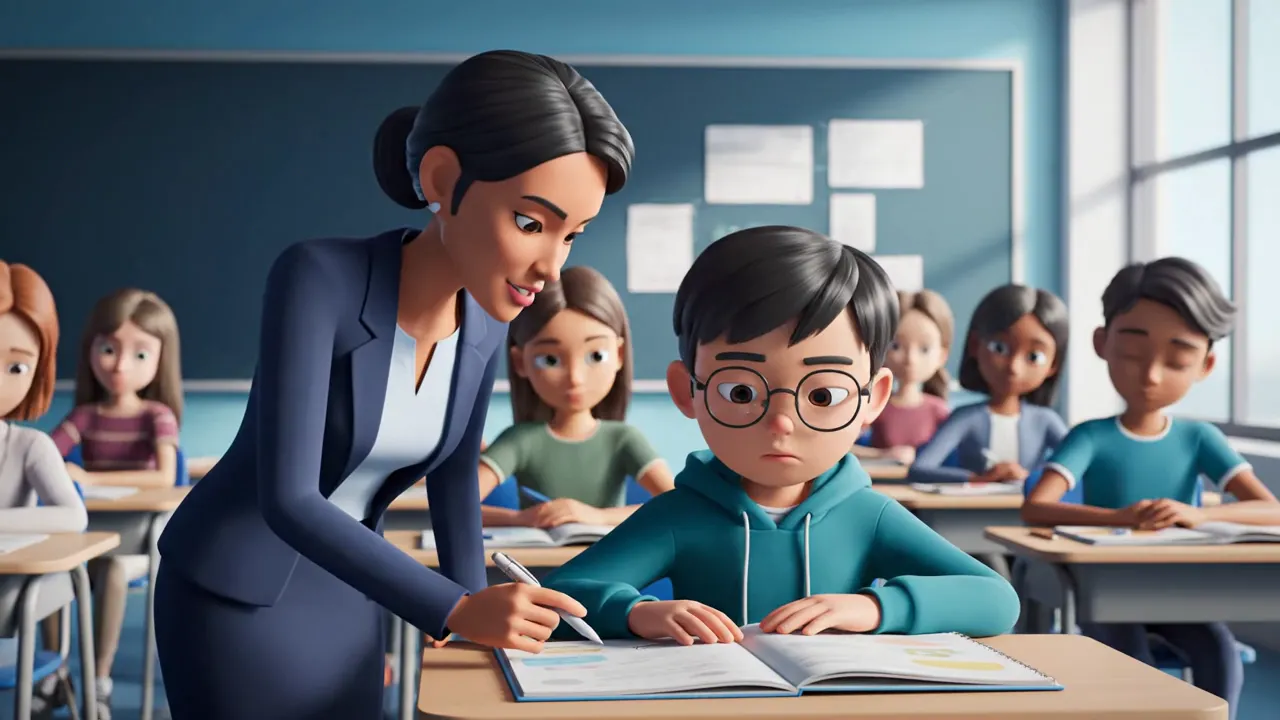
Social Spark scenario: corrected in front of everyone
Emotional regulation

What works for older students

Social Spark is the main one. Social Scenes is pitched younger (recess, family, school routines), but its conversations work for older students who need the words rehearsed.

Social Spark social skills game

Game · ages 6–13

Social Spark

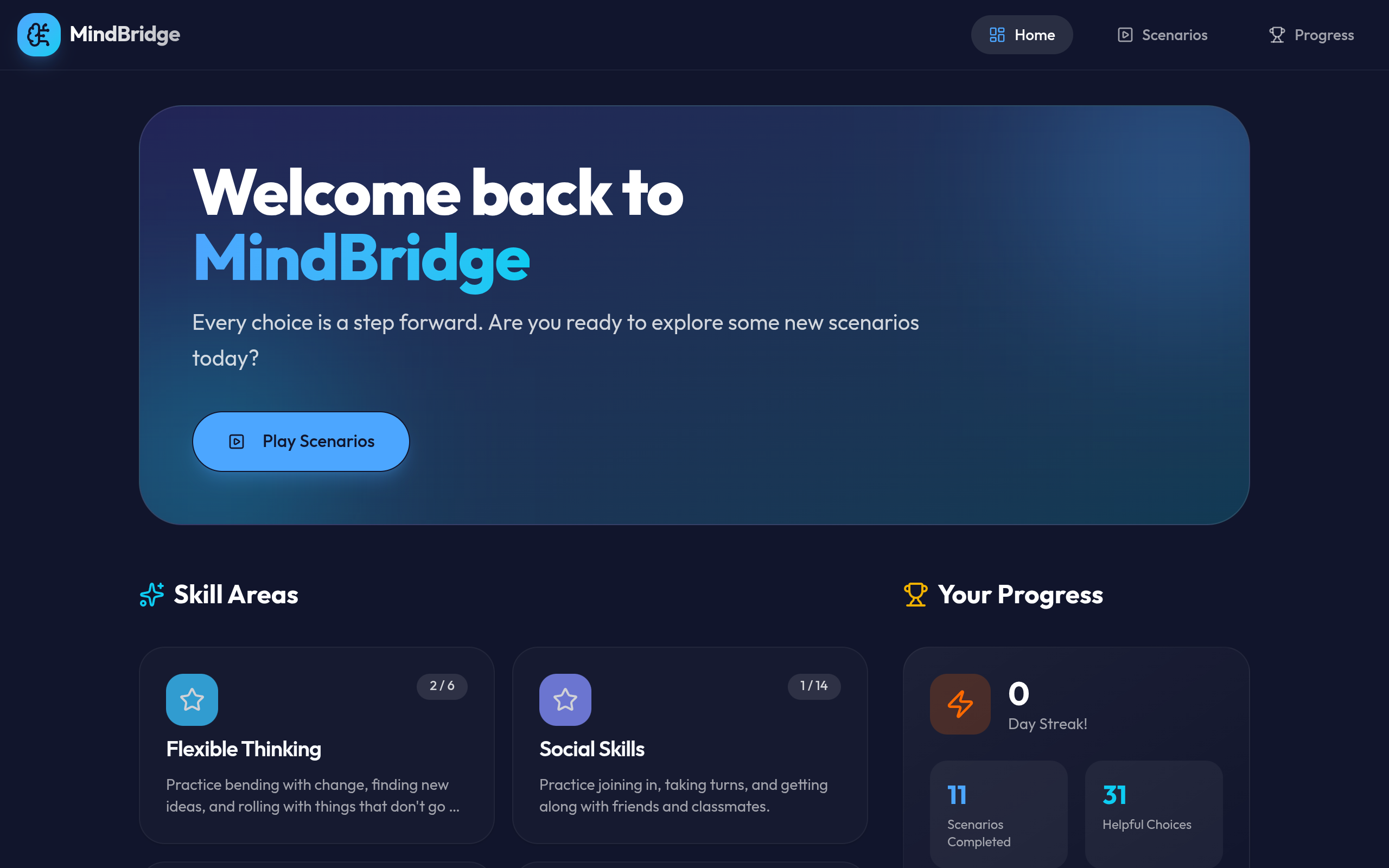
Short animated scenarios about real social moments: a change of plans, a joke that stings, being asked to pick sides. The child watches, talks about it, then picks the most helpful thing to think or say.

  • 51 scenarios, each an 8-second animated clip
  • Six skill areas: flexible thinking, social skills, perspective taking, emotional regulation, kindness, conflict resolution
  • A "Let's Talk About It" prompt on every scenario
  • Every choice has its own feedback; a less helpful one is explained, never called wrong, and the child can try again
See Social Spark
Social Scenes conversation practice game

Game · ages 6–13

Social Scenes

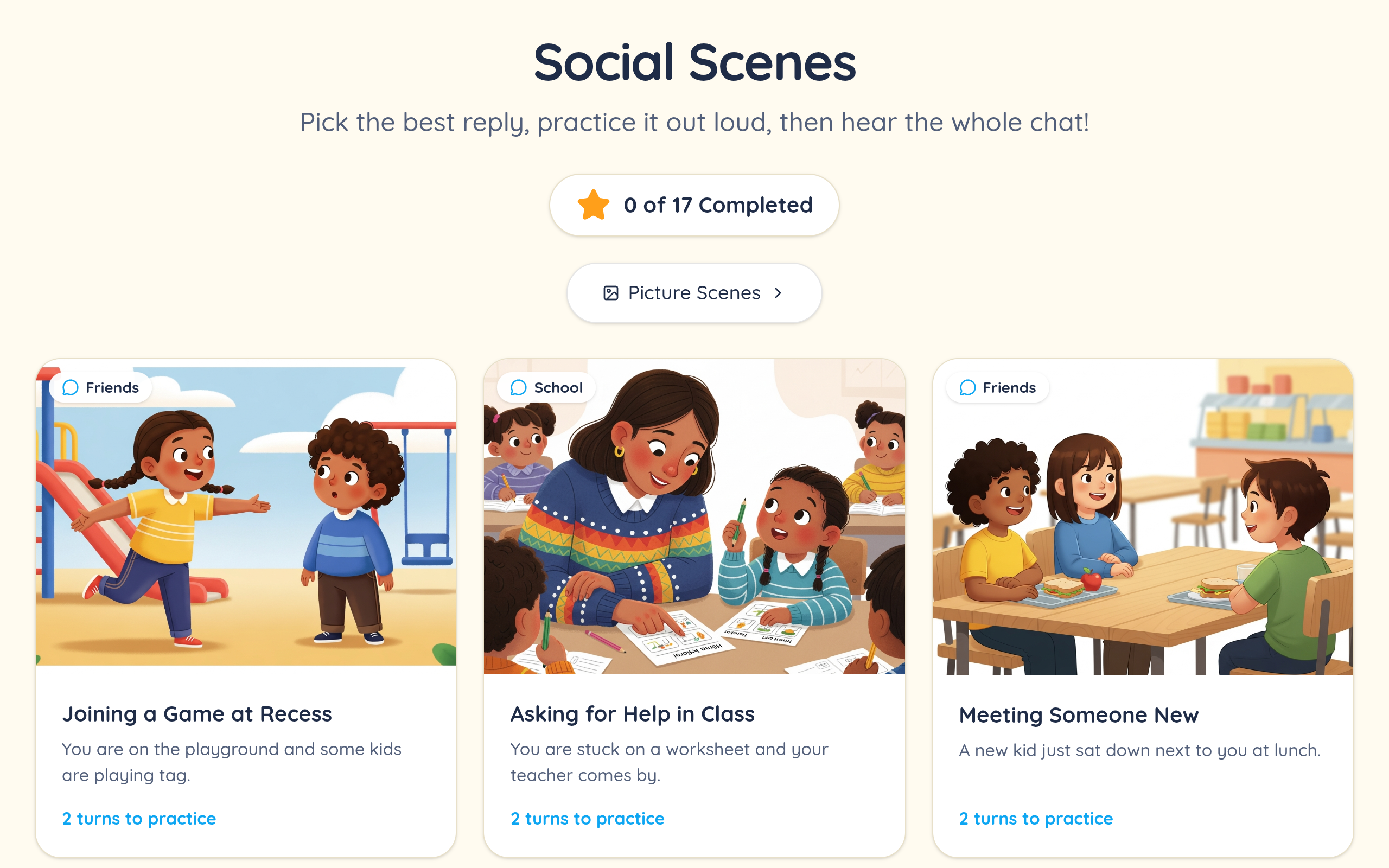
Illustrated conversations the child builds one turn at a time: hear what the other person says, pick the best reply, then record their own part and play the whole conversation back.

  • 57 conversations and 50 picture scenes
  • Six topics: Friends, Family, School, Feelings, Out & About, Helping Others
  • A not-best reply is explained, then the child tries again
  • Record your own lines and hear them back; picture scenes give clues and an example response
See Social Scenes
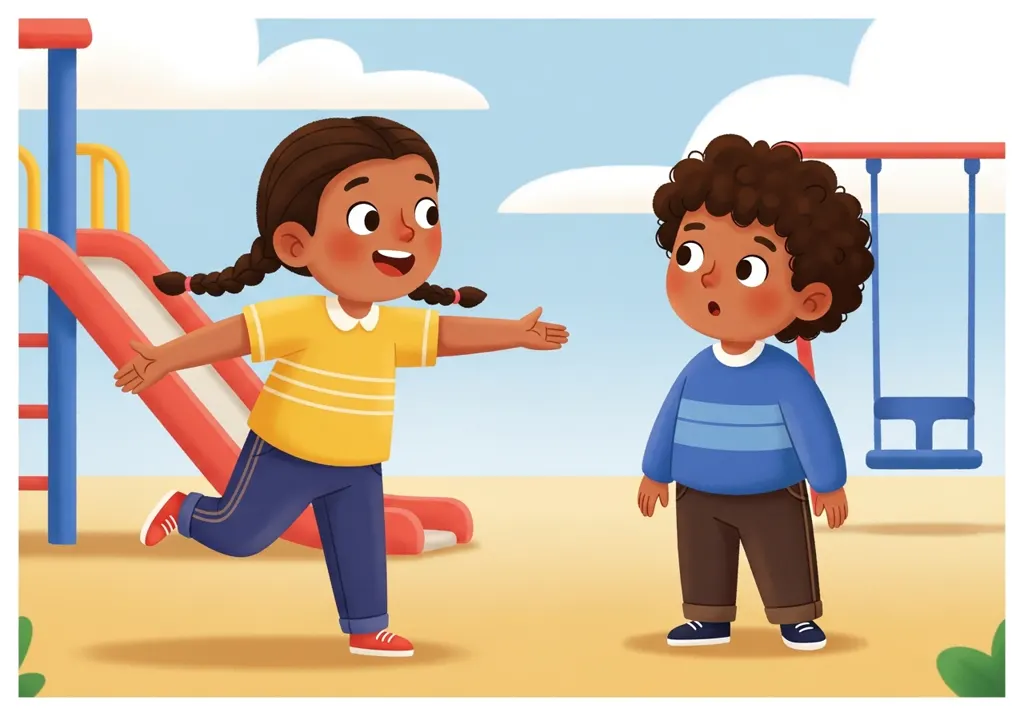
Illustration from Social Scenes: a girl invites a boy to play on the playground

Collection

Social communication games

Every game in the catalog tagged for social or pragmatic goals, side by side, with ages and session length, plus a longer guide to what pragmatic language covers.

  • A comparison table of the social games
  • Guidance on groups, debriefing and autistic students
Compare the social games

The scenarios written for older students

Titles from Social Spark that teens recognise: The Group Chat Mess, Seeing It on Their Stories, Two Friend Groups, One You, You Got the Grade They Wanted, Corrected in Front of Everyone, Two Minutes Before You Present, The Project Partner Nobody Wanted, That Was My Idea and The Secret That Got Out.

They cover the same six skill areas as the rest of the game: flexible thinking, social skills, perspective taking, emotional regulation, kindness and conflict resolution.

Running it with a teen

Make the student a party to the choice. Ask which situations they would actually like to be easier, and start there. Adolescents rarely practise because an adult asked.

Use the discussion prompt as the main event and the multiple choice as the check. Disagreeing with the "most helpful" answer is fine and often the best conversation of the session: ask what they would do instead and what might happen next.

Frequently Asked Questions

Is Social Spark too young for a 13- or 14-year-old?
It is listed for ages 6 to 13. The early scenarios suit younger children; many later ones (group chats, social media, presenting, teams) are written for middle school. Try a few in the free trial with the student before deciding.
Can a teen use it on their own?
They can, but the discussion prompt is written for a student and an adult or a group. On their own, they get the scenario and feedback without the conversation that makes it useful.
Does it work for a middle-school social skills group?
Yes. Put a scenario on the shared screen, let the group discuss the prompt, then vote on a choice before revealing the feedback.
How much does it cost?
Every account starts with a 7-day free trial of everything, with no card needed. After that it is $9.99 a month or $79.99 a year, and you can cancel anytime.

Try a scenario with your students

Social Spark, Social Scenes and every other game are in the 7-day free trial. No card needed.

Start free trial

7 days free • No card needed • Then $9.99/month or $79.99/year