
The conversation skills covered
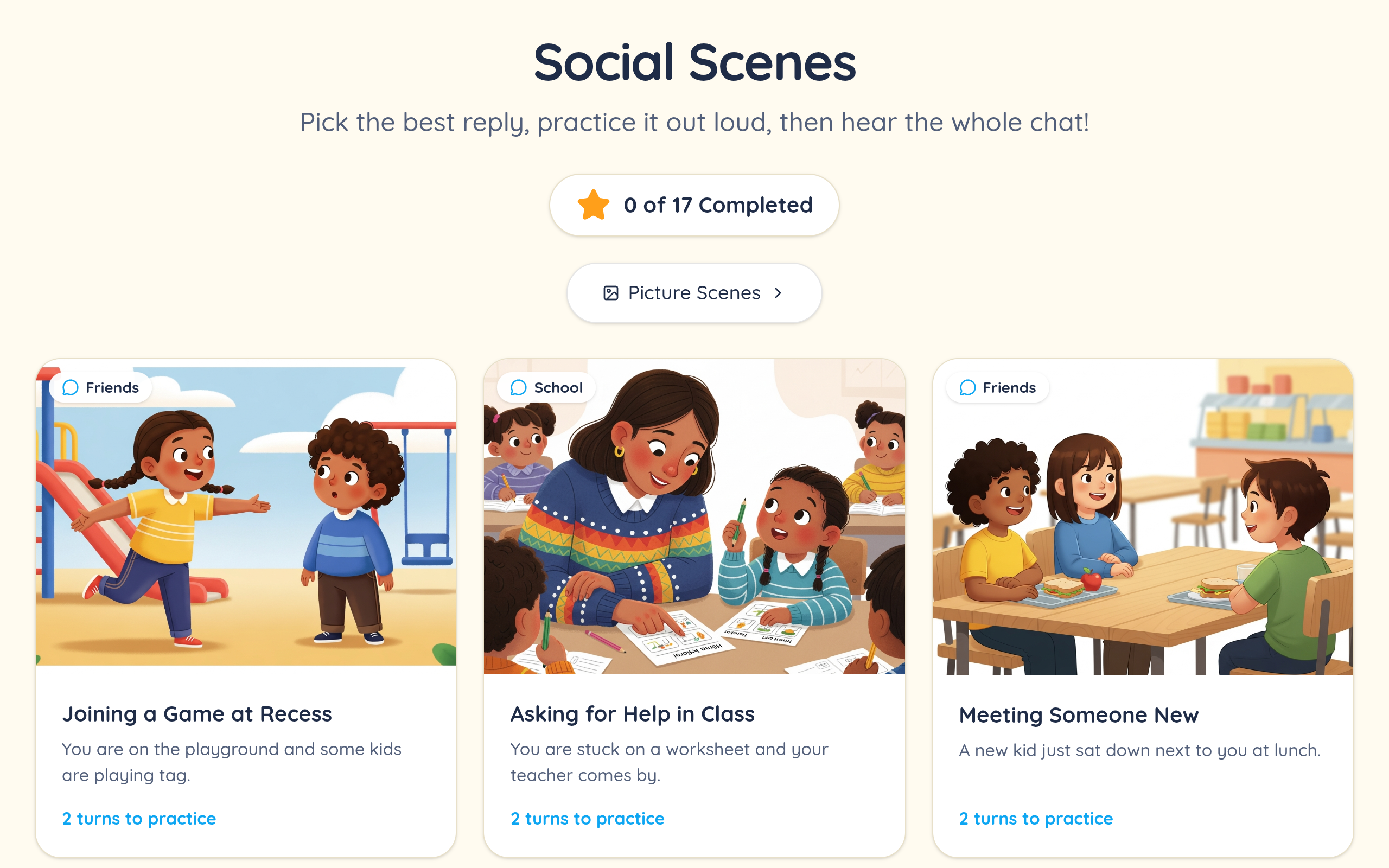
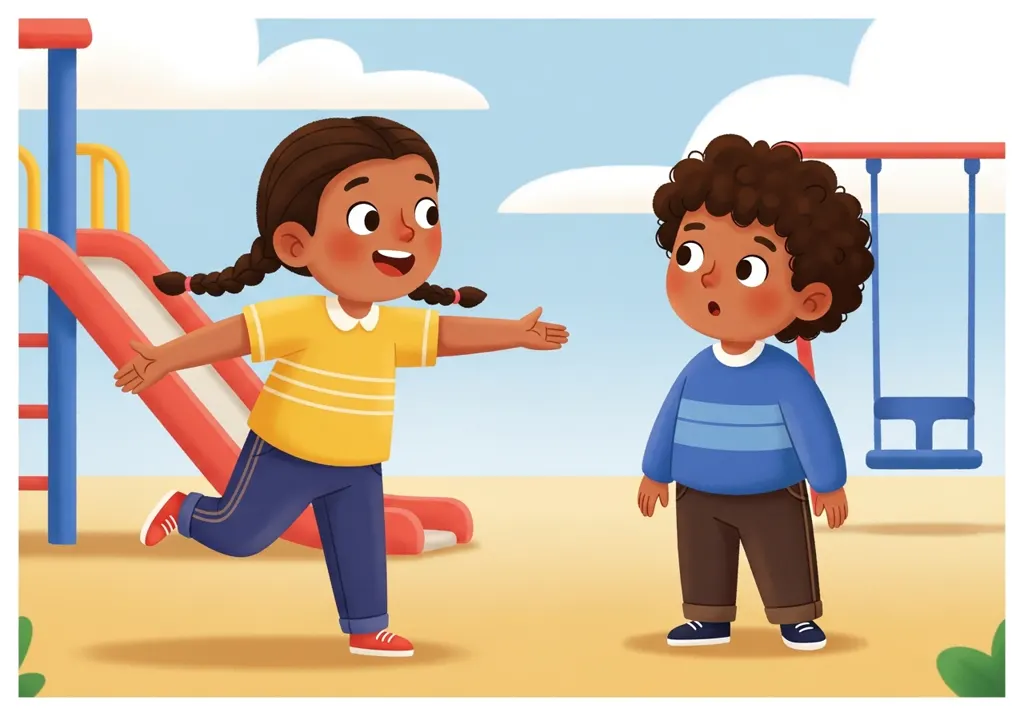
Starting: Joining a Game at Recess, Meeting Someone New, Inviting a Friend Over. Keeping it going: Taking Turns in a Conversation, Sharing Your Favorite Topic. Repair: I Didn't Understand, Saying You're Sorry, When Someone Says Something Unkind. Ending: Ending a Conversation Politely.
Several conversations are about saying what you need: Needing Quiet Time, When It's Too Loud, Needing a Break, I Need Some Space.
For autistic kids
Many autistic children do well with conversation practice that is predictable and explicit: the situation is stated, the choices are visible, nothing is timed, and a choice can be tried again. Social Scenes works that way.
The goal worth practising is the one that serves the child: being understood, asking for clarification, saying what they need, and repairing a misunderstanding. It is not making a child look less autistic. Several conversations in Social Scenes are about exactly those functional skills: needing quiet, needing space, saying "I didn't understand". A conversation between an autistic and a non-autistic person can break down from either side, and good practice respects that.
These games are practice material for use with a child's SLP, teacher or parent. They are not a treatment, and we make no claim about outcomes.
Run each conversation twice
The first time through is cold. Then listen back to the recording together, pick one thing to change (a question back to the other person, a little more volume) and record again. Children tend to take feedback from their own playback more readily than from an adult.