



For SLPs

Pragmatic Language Activities for Speech Therapy, Online

For no-prep pragmatic language work online, use Social Scenes for conversation (choosing replies, turn-taking, repair, recording and self-review), Social Spark for the social reasoning behind it (perspective taking, flexible thinking, conflict resolution, emotional regulation), and the Feelings & Social Scenes deck for emotion recognition with younger students.

7 days free • No card needed • Then $9.99/month or $79.99/year

  • Nothing to print, cut or laminate
  • Screen-share in teletherapy or play on the student's device
  • Works one-to-one and in groups
  • Every choice explained, so the discussion has something to start from
Social Scenes illustration: when someone says something unkind
Social Scenes
Social Spark scenario: finding a fair compromise
Social Spark
Social Spark scenario: in someone else's shoes
Perspective taking
Social Scenes illustration: picking your part in a group
Group work

Activities by goal

Match the activity to the goal on the plan.

Social Scenes conversation practice game

Game · ages 6–13

Social Scenes

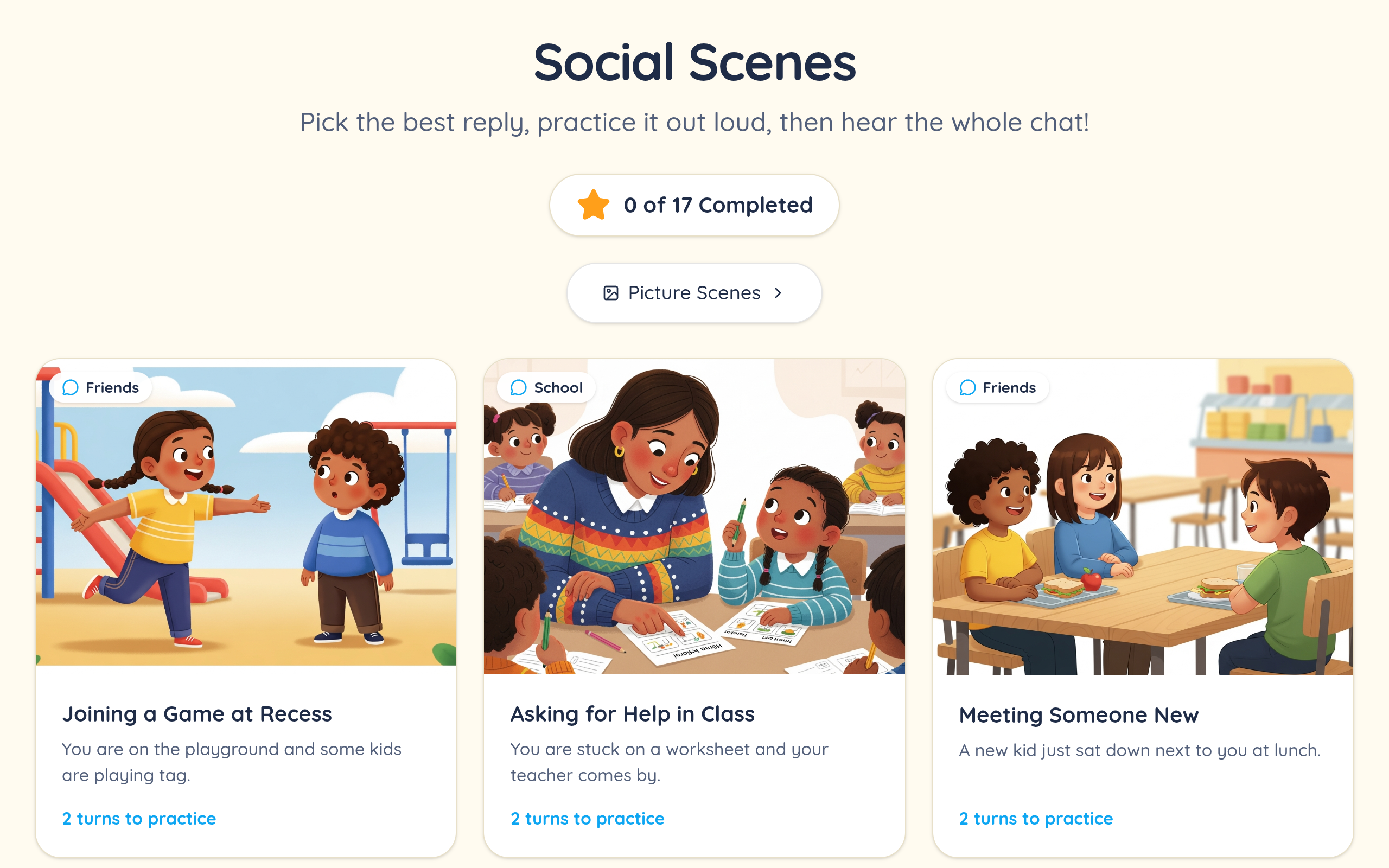
Illustrated conversations the child builds one turn at a time: hear what the other person says, pick the best reply, then record their own part and play the whole conversation back.

  • 57 conversations and 50 picture scenes
  • Six topics: Friends, Family, School, Feelings, Out & About, Helping Others
  • A not-best reply is explained, then the child tries again
  • Record your own lines and hear them back; picture scenes give clues and an example response
See Social Scenes
Social Spark social skills game

Game · ages 6–13

Social Spark

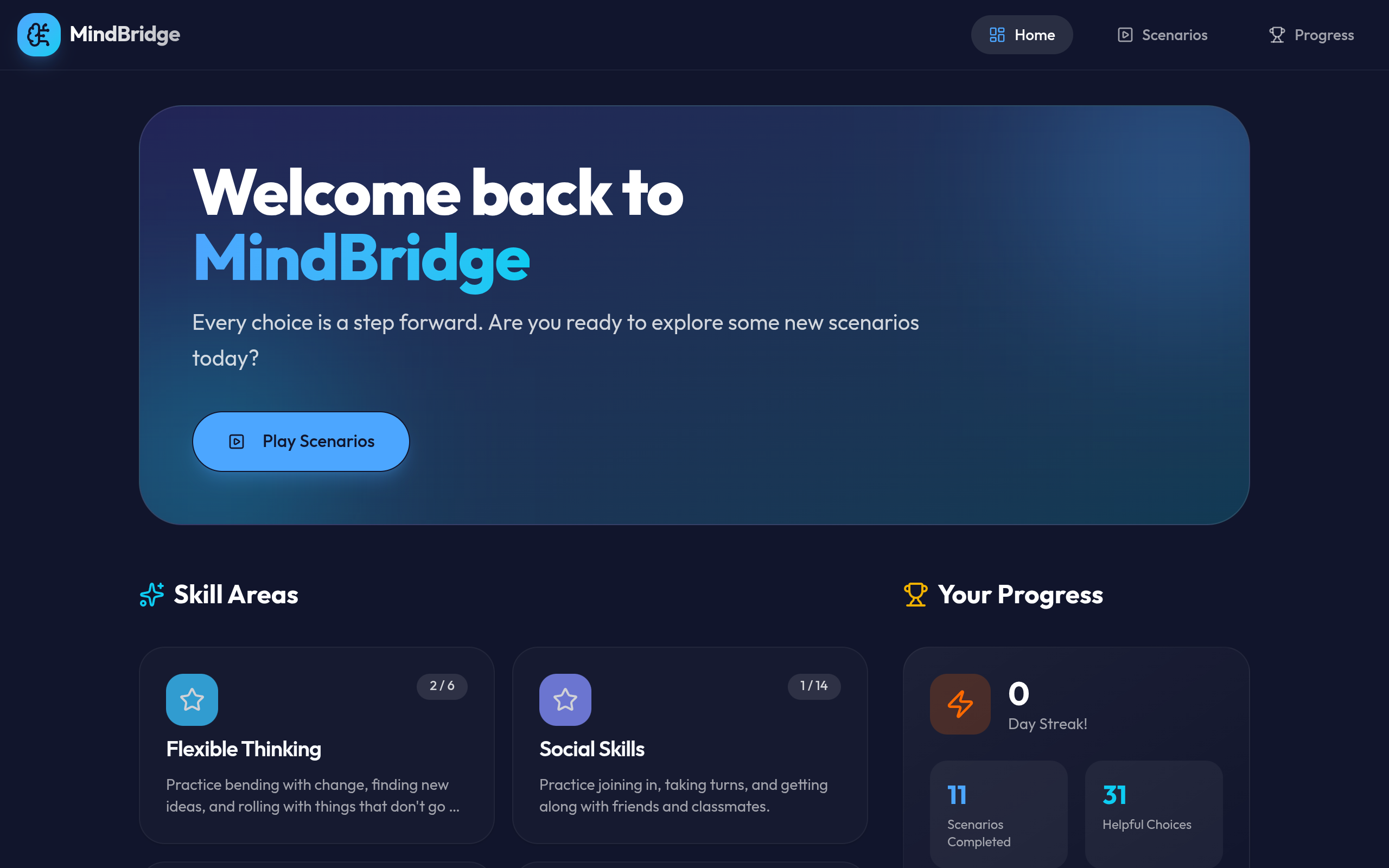
Short animated scenarios about real social moments: a change of plans, a joke that stings, being asked to pick sides. The child watches, talks about it, then picks the most helpful thing to think or say.

  • 51 scenarios, each an 8-second animated clip
  • Six skill areas: flexible thinking, social skills, perspective taking, emotional regulation, kindness, conflict resolution
  • A "Let's Talk About It" prompt on every scenario
  • Every choice has its own feedback; a less helpful one is explained, never called wrong, and the child can try again
See Social Spark
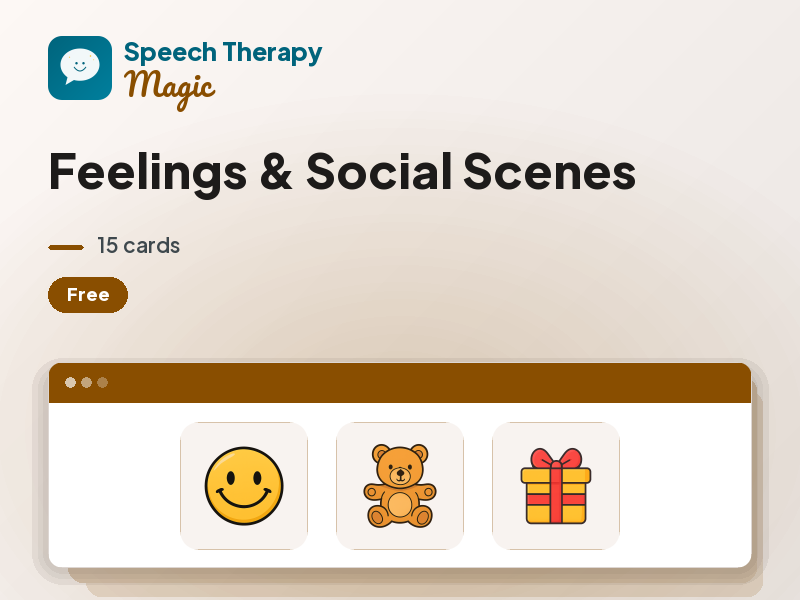
Feelings & Social Scenes deck cover

Ready-made deck · K–3rd grade

Feelings & Social Scenes

A 15-card Magic Studio deck: eight short scenes where the child names how the character feels, then picks a kind thing to say.

  • Eight feelings: sad, surprised, happy, angry, scared, excited, confused, calm
  • Three what-could-you-say cards, a situation-to-feeling match and a kind/unkind word sort
  • Share it with a student by PIN; they need no account
See the deck
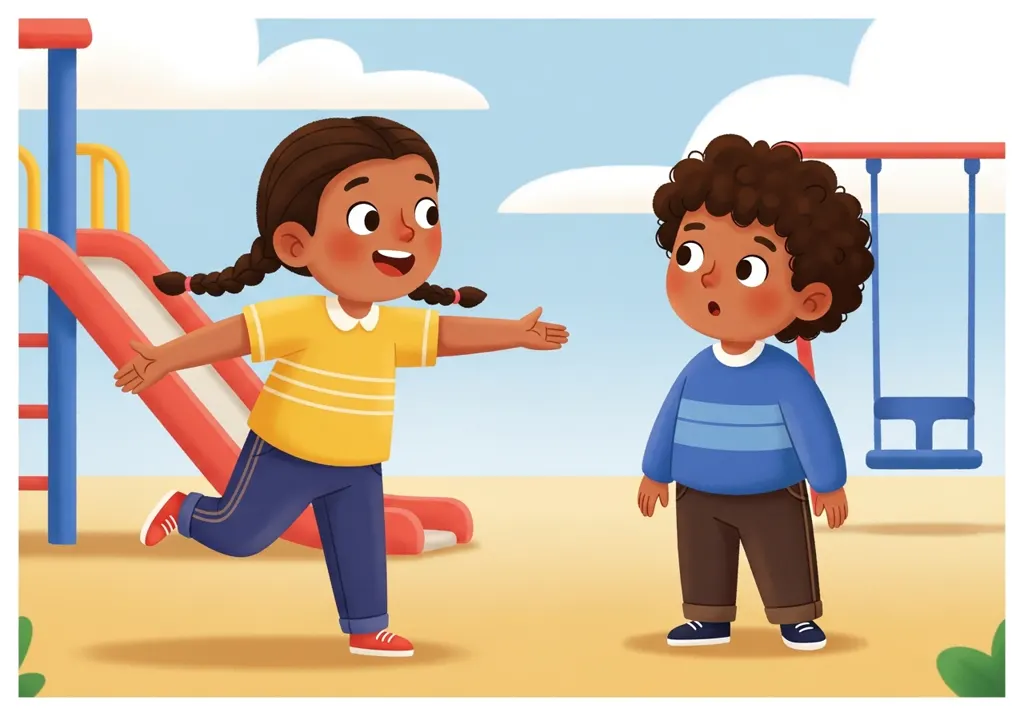
Illustration from Social Scenes: a girl invites a boy to play on the playground

Collection

Social communication games

Every game in the catalog tagged for social or pragmatic goals, side by side, with ages and session length, plus a longer guide to what pragmatic language covers.

  • A comparison table of the social games
  • Guidance on groups, debriefing and autistic students
Compare the social games

Matching activities to pragmatic goals

Using language for different purposes (greeting, requesting, refusing, apologising): Social Scenes' conversations, e.g. Asking for Help in Class, Ordering at a Cafe, Saying You're Sorry.

Turn-taking, topic maintenance and repair: Social Scenes, e.g. Taking Turns in a Conversation, Sharing Your Favorite Topic, I Didn't Understand, Ending a Conversation Politely.

Perspective taking and inferring feelings: Social Spark's perspective-taking scenarios, and Social Scenes' picture scenes, which ask what a person is feeling or saying with visible clues.

Flexible thinking, conflict resolution, emotional regulation: Social Spark's other five skill areas, each with its own set of scenarios.

In a session

Debrief after the choice, not during it. Let the student choose, read the feedback together, then ask "what do you think she thought when you said that?" That question is perspective-taking practice in its own right.

In a group, give the students who are not choosing a job: agree or disagree with the choice and say why.

For remote sessions, see teletherapy games: screen-share the game or send the student a link.

Frequently Asked Questions

What are good online pragmatic language activities?
Activities where the student is inside a situation and has to choose what to think or say, with feedback on the choice. Social Scenes (57 conversations, 50 picture scenes) and Social Spark (51 scenarios in six skill areas) are built that way, and both run in a browser.
Can I use these in teletherapy?
Yes. Screen-share the game in your video platform (tick the share-audio option), or have the student open it on their side while you watch.
Do the activities track data for IEP goals?
Social Spark and Social Scenes do not keep per-student accuracy data today. Use them as the activity and take your own data on the target behaviour.
How much does it cost?
Every account starts with a 7-day free trial of everything, with no card needed. After that it is $9.99 a month or $79.99 a year, and you can cancel anytime.

Use it in your next session

Social Spark, Social Scenes and every other game are in the 7-day free trial. No card needed.

Start free trial

7 days free • No card needed • Then $9.99/month or $79.99/year