For SLPs

Speech Therapy Games for Teletherapy

Teletherapy punishes materials that need setup. If an activity has to be installed, printed, or talked through with a parent over the phone, it will not survive a full caseload.

Everything here is a URL. Screen-share it, or send it to the student's side and watch them play — both work, and neither needs anything installed at the family's end.

Compare These Games

What each game targets, who it suits, and what it costs — the same details as the cards below, side by side.

Compare These Games
GameWhat it practicesAgesWhere it fitsSession
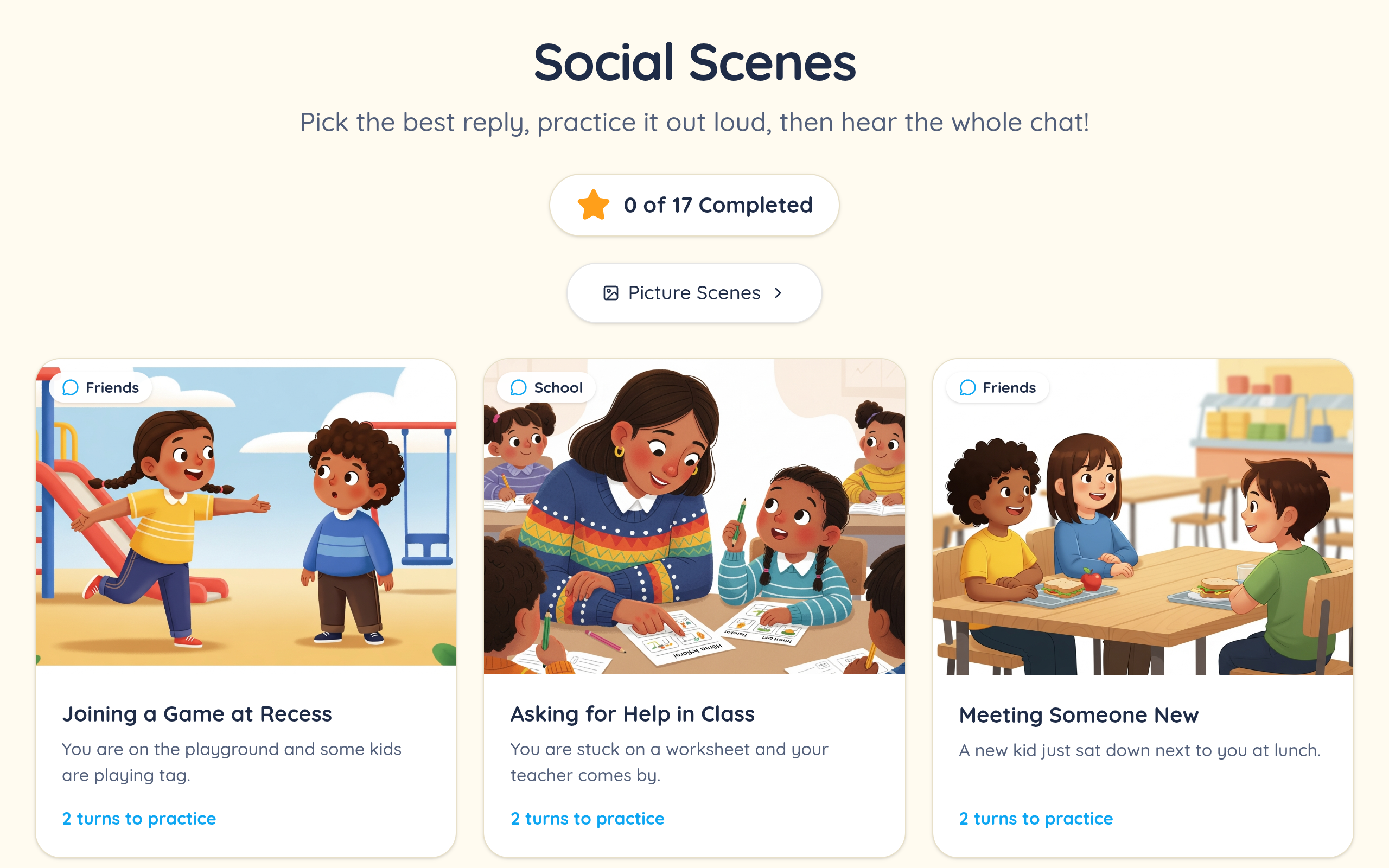
Social ScenesConversation Skills, Social Communication, Self-MonitoringAges 6–13Anywhere15 min
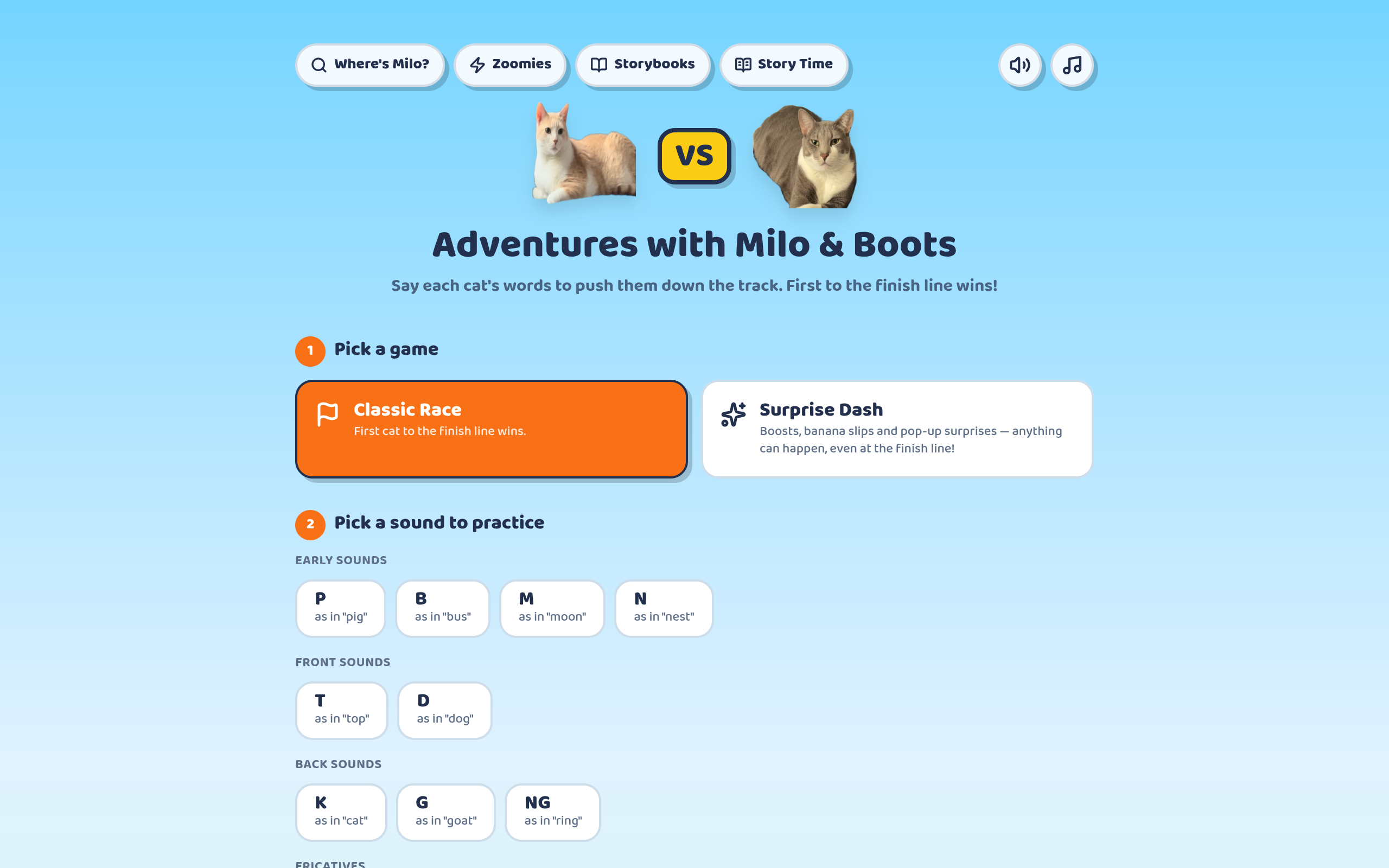
Speech CatsArticulation, Speech Sound Practice, Speech ClarityAges 4–10Anywhere10 min
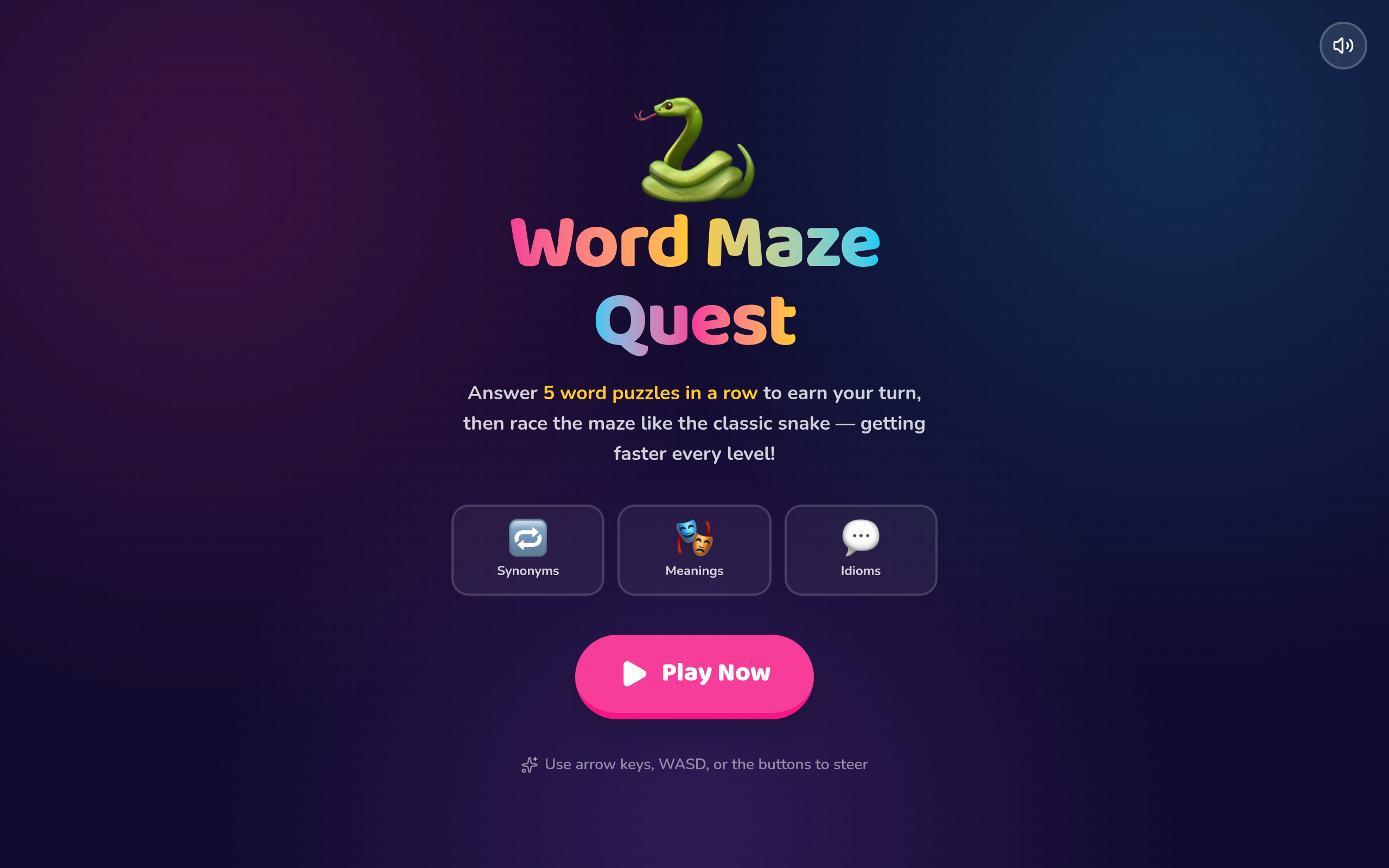
Level UpSynonyms, Antonyms, Multiple MeaningsAges 7–13Anywhere5 min
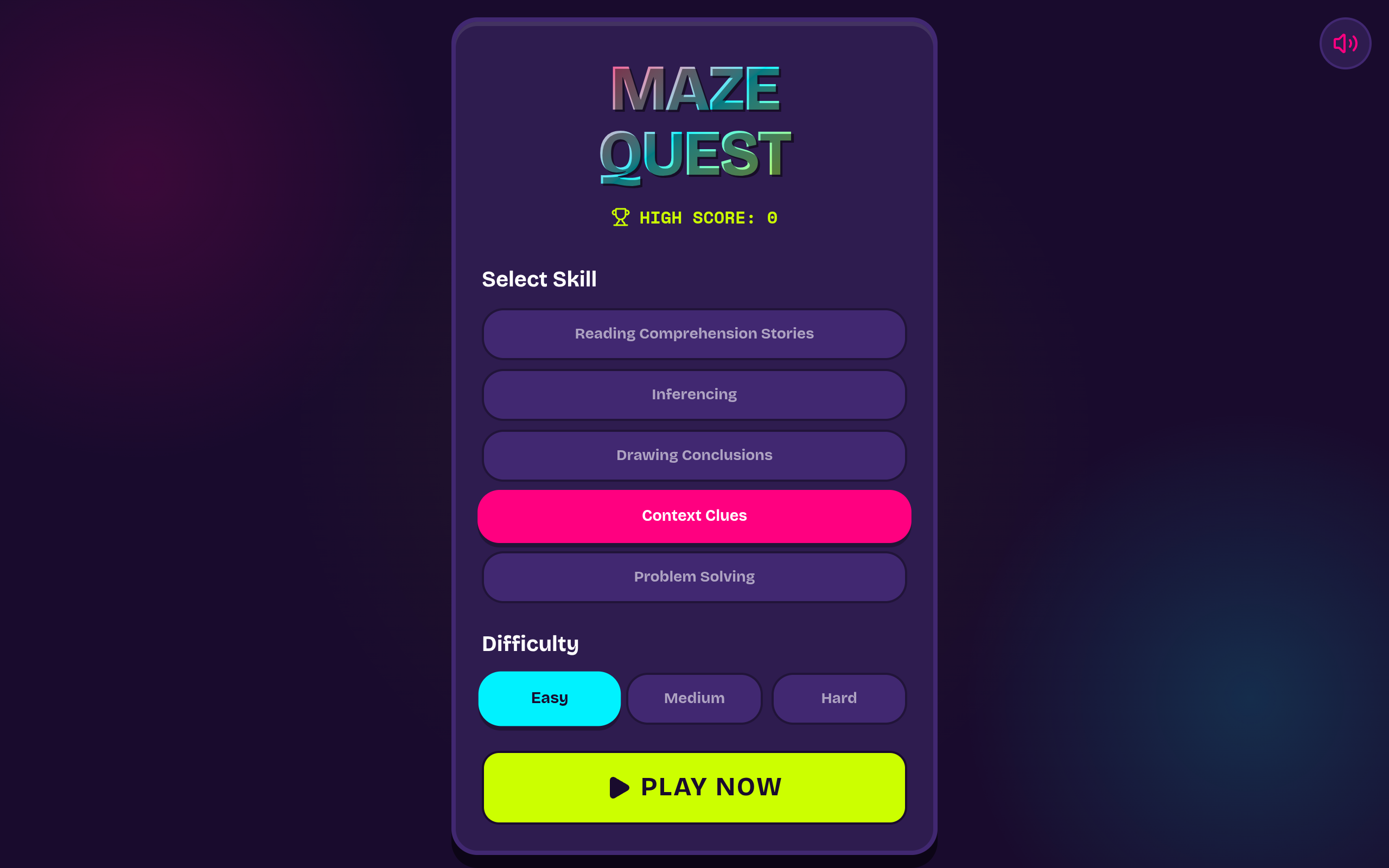
Maze QuestComprehension, Inferencing, ReasoningAges 6–12Anywhere10 min
Social SparkSocial Skills, Emotional Regulation, Perspective TakingAges 6–13Anywhere10 min

“Session” is a typical sitting, not a level length — none of these games end on their own. A dash means we have not published that detail for a game yet rather than that it does not apply.

How Kids Practice With These Games

  • Repetitions without the fight

    Progress in speech and language runs on volume of practice. A ten-minute game produces dozens of engaged responses where a worksheet produces a handful of reluctant ones — the target is identical, the willingness is not.

  • Built around real therapy goals

    Every game is developed by our team with our clinical lead, a licensed speech-language pathologist, against the targets that appear on IEPs and treatment plans: articulation, vocabulary, comprehension, following directions, and pragmatic language.

  • Nothing to install or print

    They run in any browser, on a phone, tablet, Chromebook, laptop, or classroom smartboard, and they are built touch-first — so the iPad on the sofa and the cart in the school library behave the same way.

  • Practice out loud, not just tapping

    Several games ask the child to say the word or record their answer and play it back. Hearing your own production is the fastest feedback there is, and it is the part a printable can never do.

  • Practice that gets recorded

    Each child's profile keeps a history of what was practised across every activity on the site, so "has this actually helped?" has an answer that is not a memory, with trends and sound mastery over time.

  • No ads, and no accounts for children

    Games sit behind a login, so they are not in ad networks and not open to the web. A parent, therapist, or teacher holds the account and the data — children never make one themselves.

Screen Share or Student-Side: Which to Use

Sharing your own screen keeps you in control of the activity and works regardless of what the student is using — helpful with younger children, unreliable home devices, or anyone who cannot navigate to a link unaided. The cost is interaction: the student is directing you rather than doing it themselves, and remote-control features in video platforms are inconsistent enough that most clinicians stop relying on them.

Having the student open the game on their side restores the hands-on part, which matters a great deal for engagement and for anything requiring a microphone. The cost is that you can no longer see exactly what they see, so you are working from their face and their audio rather than the screen.

The practical answer for most caseloads is both, chosen per student. Screen-share for the young and the technically fragile; student-side for anyone who can manage it, because doing beats watching.

Audio Is the Thing That Breaks

The recurring teletherapy problem is not video, it is sound. Screen-sharing a tab with game audio requires the share-audio option to be ticked, and it is easy to forget — a silent game confuses a child far more quickly than a frozen one.

Judging articulation over compressed audio is genuinely harder than in person. Video platforms apply noise suppression and aggressive compression tuned for intelligibility rather than fidelity, which can smooth over exactly the distortions you are listening for. Headphones on your end help; asking the family to use a wired connection where possible helps more.

For sounds where the acoustic detail matters, our pronunciation-scoring activity records on the student's own device rather than through the call, which sidesteps the compression problem entirely.

Setting Families Up Once

The single highest-value thing in a teletherapy caseload is a first session spent on setup rather than therapy. Get the family logged in, confirm the browser works, check the microphone permission, and bookmark the page — that quarter of an hour buys back a minute or two from every subsequent session.

Because there is nothing to install, that setup is unusually short. An account and a bookmark is the whole of it, and it survives the family switching between a tablet and a laptop.

For carryover, a link is the lowest-friction home practice you can assign. No printing, no lost worksheet, and the same activity you used in session.

Frequently Asked Questions

Can I screen-share these games in a teletherapy session?
Yes. They run in a browser tab, so any video platform's screen or tab sharing works. Remember to enable audio sharing if the activity has sound — that is the most common thing to forget.
Do families need to install anything?
No. A browser and an account is all it takes. That is usually the deciding factor for teletherapy, where you cannot troubleshoot an install remotely.
Will the student need a microphone?
Only for the recording and pronunciation-scoring activities, and a built-in laptop, tablet, or phone microphone is fine. The rest are tap-and-play.
Is it better to share my screen or send the student a link?
Depends on the student. Screen-share is more robust and better for young or less independent children; student-side play is more engaging and necessary for microphone activities. Most clinicians use both, chosen per case.
Can I use these with a group over video?
Yes, with screen sharing and turn-taking — one student directs while the others watch and respond. Our classroom games page covers group dynamics in more detail.

Try It in Your Next Session

Start your 7-day free trial — no card needed. Screen-share a game today.

Start free trial

7 days free • No card needed • Then $9.99/month or $79.99/year