Comprehension goals

Listening Comprehension and Inferencing Games

Comprehension is what happens after the words have been heard. A child can catch every word of a story, repeat it back accurately, and still not know why the character was upset — because an inference is not in the sentence. It is what you get when you add what was said to what you already knew, and that addition is the step that breaks down.

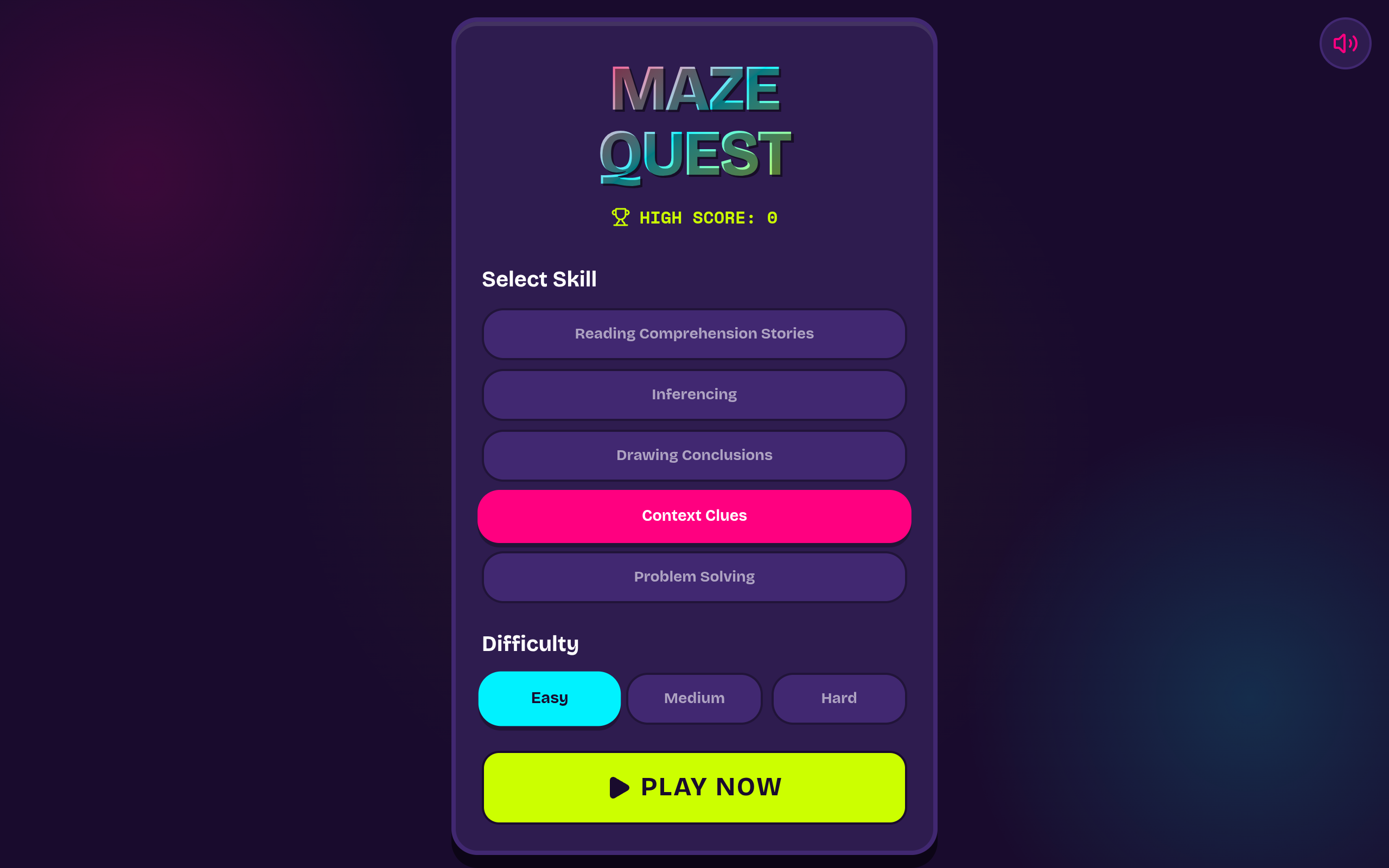
This is also the quietest kind of difficulty on this site. Nothing sounds wrong, the child reads aloud fluently, and the problem often surfaces as a reading score that drops around third grade. The standard model of reading makes the reason plain: reading comprehension is decoding multiplied by language comprehension, so a fluent decoder with weak language comprehension has a product close to zero on anything that requires understanding.Maze Quest is our comprehension game — questions are the mechanism for getting through the maze rather than an interruption to it, which is a meaningfully different experience from a worksheet with the same questions on it. Published catalog activities tagged for comprehension join it below.

Playable in any browser

Compare the comprehension games

Compare on Ages and Session. Comprehension work is cognitively heavy in a way articulation drill is not — a fifteen-minute inferencing activity asks more of a tired eight-year-old than a fifteen-minute sound game does.

Compare the comprehension games
GameWhat it practicesAgesWhere it fitsSessionPlan
Maze QuestComprehension, Inferencing, ReasoningAges 6–12Anywhere10 minPro

“Session” is a typical sitting, not a level length — none of these games end on their own. A dash means we have not published that detail for a game yet rather than that it does not apply.

Comprehension and inferencing games

Maze Quest is the hand-written entry here; anything published in the catalog and tagged for comprehension appears alongside it. A short list, honestly reported.

1 activity on this page.

How Kids Practice With These Games

  • Repetitions without the fight

    Progress in speech and language runs on volume of practice. A ten-minute game produces dozens of engaged responses where a worksheet produces a handful of reluctant ones — the target is identical, the willingness is not.

  • Built around real therapy goals

    Every game is developed by our team with our clinical lead, a licensed speech-language pathologist, against the targets that appear on IEPs and treatment plans: articulation, vocabulary, comprehension, following directions, and pragmatic language.

  • Nothing to install or print

    They run in any browser, on a phone, tablet, Chromebook, laptop, or classroom smartboard, and they are built touch-first — so the iPad on the sofa and the cart in the school library behave the same way.

  • Practice out loud, not just tapping

    Several games ask the child to say the word or record their answer and play it back. Hearing your own production is the fastest feedback there is, and it is the part a printable can never do.

  • Practice that gets recorded

    An account keeps a history of what was practised across every activity on the site, so "has this actually helped?" has an answer that is not a memory. Trends and sound mastery over time are Pro features.

  • No ads, and no accounts for children

    Games sit behind a login, so they are not in ad networks and not open to the web. A parent, therapist, or teacher holds the account and the data — children never make one themselves.

WH-Questions Are a Hierarchy, Not a List

The WH-questions arrive in a fairly reliable order, and knowing it tells you where to start. "What" and "who" come first, because the answer is a thing or a person and it is usually right there. "Where" follows. "When" is harder because it needs a grasp of time. "Why" and "how" come last, because both require reasoning about something that was never stated.

Within any of those, questions still range from literal to inferential to predictive. "What did the boy carry?" is literal — the answer is in the text. "Why was he in a hurry?" is inferential. "What will happen when he opens the door?" is predictive. A child who is fine on the first and lost on the second has a very specific, workable target, and an assessment that reports only "comprehension difficulty" has not gone far enough.

That hierarchy is also how you grade an activity on the spot. If a child fails an inference, drop to the literal question underneath it, confirm they held the facts, then step back up. Most of the time the facts were there and the leap was not.

What Inferencing Actually Requires

An inference needs three things at once: the information from the text, relevant background knowledge, and enough working memory to hold both while combining them. When inferencing fails, it is worth working out which of the three is missing, because they need different responses.

Background knowledge is the one most often overlooked. A child cannot infer that a character is at a wedding from a mention of confetti if they have never been told what confetti is for. That is a knowledge gap wearing a comprehension costume, and it is why vocabulary and comprehension goals usually travel together.

The picture-based inferencing worksheet — look at the scene, say why the girl is sad — is the standard material and its limitation is that it removes the memory load entirely. Everything needed stays on the page. A spoken or narrative version is harder and closer to the real demand, which is a classroom where the information arrives once, out loud, and then is gone.

Comprehension, Reading, and the Third-Grade Cliff

Up to about third grade, school teaches reading. After it, reading is how everything else is taught, and text gets denser at exactly the point at which explanations stop. Children whose difficulty is language comprehension rather than decoding often look fine until here and then appear to "suddenly" struggle, which is why the drop is usually described as a cliff rather than a slope.

The practical test parents can run themselves takes thirty seconds: have the child read a paragraph aloud, then close the book and ask what happened. Accurate reading with an empty retell points at comprehension, not at reading. Inaccurate reading points somewhere else entirely.

This is also why listening comprehension is worth practising without text at all. Removing decoding from the task isolates the language, and for a child with both difficulties it lets you work on one of them at a time.

Running It in a Session or at Home

Books and films work as well as any material, provided you stop. Pause and ask what might happen next, why someone did that, and how they are feeling — three questions in a chapter beats twenty at the end, because the answer is still available and the child has not yet been asked to hold the whole plot.

Resist the urge to quiz. Comprehension practice that turns into an interrogation gets quiet children, and a question the adult already knows the answer to is a different task from a question that matters. Wondering aloud — "I think he's about to get in trouble" — invites a response and models the reasoning at the same time.

In a mixed group, comprehension is the goal that benefits most from other students being in the room. Ask the group to agree or disagree with an answer before it is confirmed, and to say why. That turns a one-player game into genuine practice for everyone waiting a turn.

Frequently Asked Questions

What is inferencing in speech therapy?
Working out something that was not stated by combining what was said with what you already know — why a character is upset, what is about to happen, what someone meant. It is one of the most common language goals from about age six onwards and it is the step most often missing when a child can retell a story but cannot explain it.
What order do WH-questions develop in?
Roughly "what" and "who" first, then "where", then "when", with "why" and "how" last because both need reasoning rather than recall. Within each, literal questions come before inferential and predictive ones, which is the fastest way to grade an activity up or down mid-session.
My child reads accurately but doesn't understand what they read. Is that a language problem?
Very often, yes. Reading comprehension depends on decoding and on language comprehension, and a child who decodes fluently can still be missing the second. It usually shows around third grade, and listening comprehension work — no text involved — is the standard way to isolate and build it.
What age is comprehension work aimed at?
Comprehension goals are common right through elementary school and beyond. Our comprehension game is built for ages 6 to 12, which covers most of the range where inferencing and WH-question goals appear on a therapy plan.
How do I practise listening comprehension at home?
Read or watch something together and stop three times to ask why, how, and what will happen next. Then close the book and ask for a retell. That takes five minutes, needs nothing bought, and targets the exact skill a game supports rather than replaces.

Try a Comprehension Round

Create a free account and play Maze Quest today. No credit card required.

Get Started Free

Start free • No credit card required