For families

Speech Therapy Games for Parents

Most parents arrive here holding a folder. Someone qualified handed it over at the end of a session, said practise at home, and the appointment was already running late — so the folder explains what to practise and nothing at all about how.

That gap is what this page is for. The games are the easy part; the hard part is knowing what a good five minutes looks like, whether you should correct the word your child just said wrong, and how to tell the difference between practice that is working and practice that is quietly making your child hate talking to you.One thing worth knowing before you start: your child's speech-language pathologist has almost certainly chosen one specific target — a particular sound, in a particular position in the word, at a particular level. Practising a different sound is well-meant effort in the wrong place. The single most useful thing you can do this week is ask which one it is, and there is a section below on exactly what to ask for.

Which Game Suits Your Child

Start with Ages — an activity aimed three years above your child will end in frustration faster than any technique can rescue. Then read what it practices and check it against what your child is working on. The Plan column is currently the least interesting one: every game here is free.

Which Game Suits Your Child
GameWhat it practicesAgesWhere it fitsSessionPlan
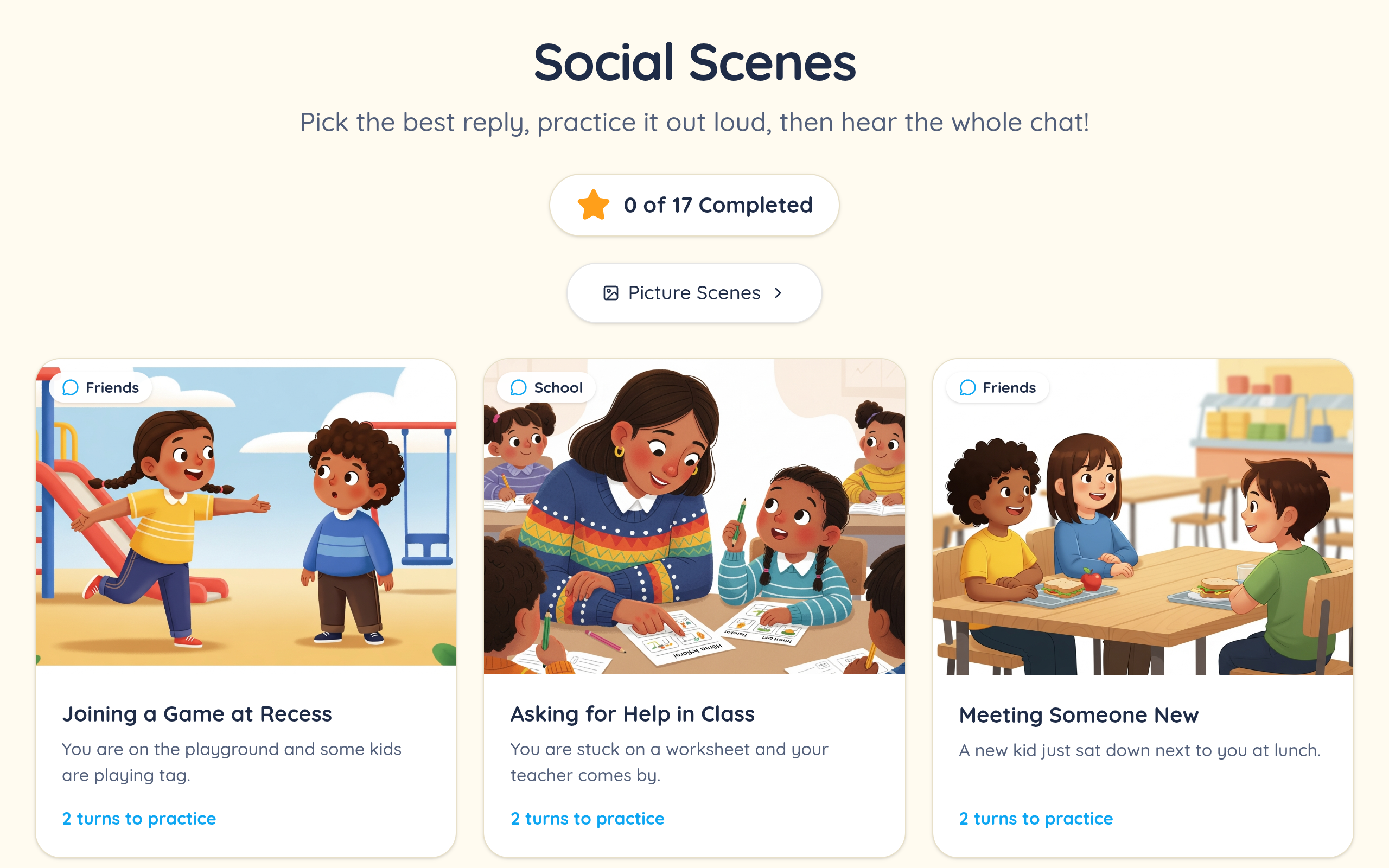
Social ScenesConversation Skills, Social Communication, Self-MonitoringAges 6–13Anywhere15 minPro
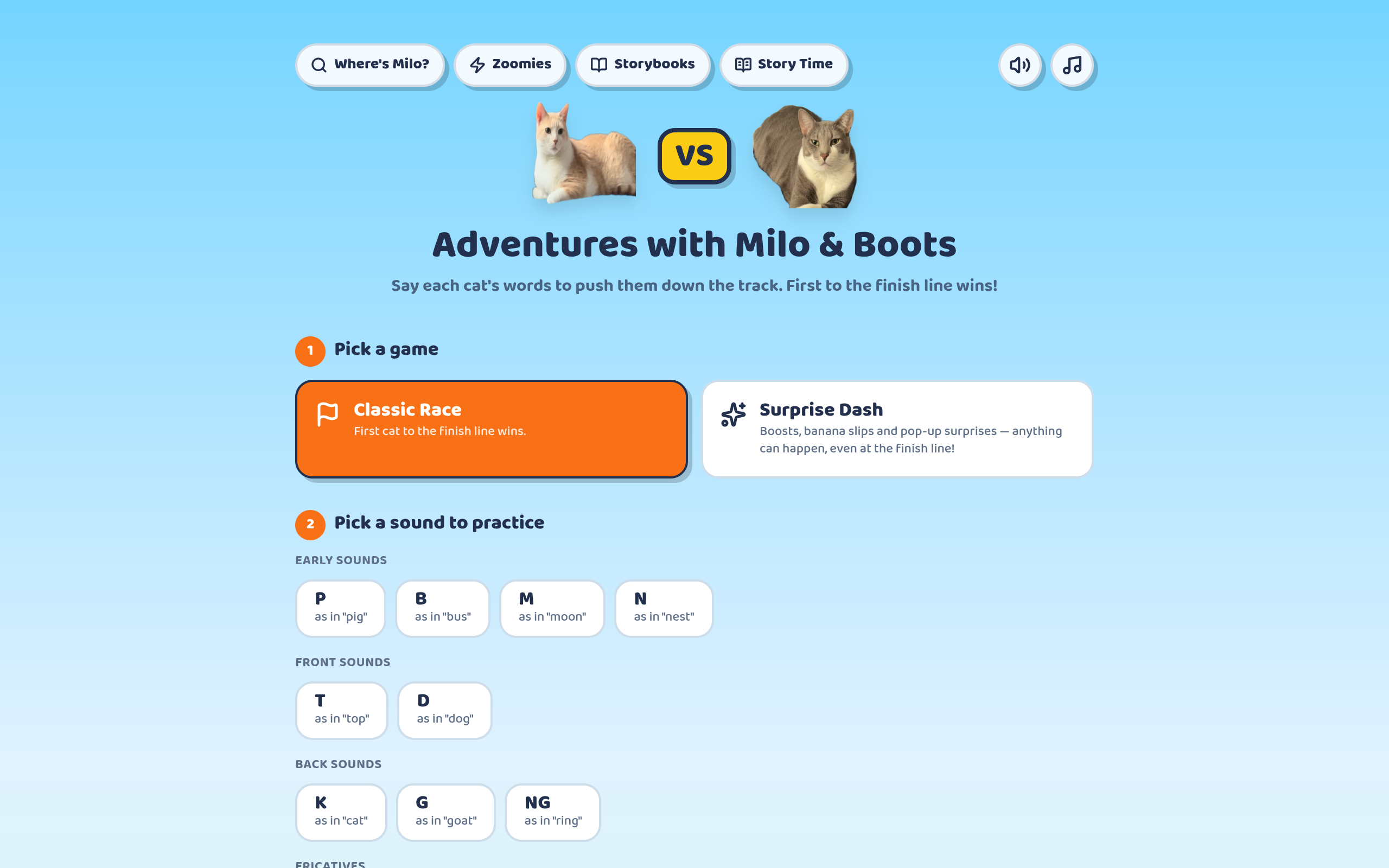
Speech CatsArticulation, Speech Sound Practice, Speech ClarityAges 4–10Anywhere10 minPro
Level UpSynonyms, Antonyms, Multiple MeaningsAges 7–13Anywhere5 minPro
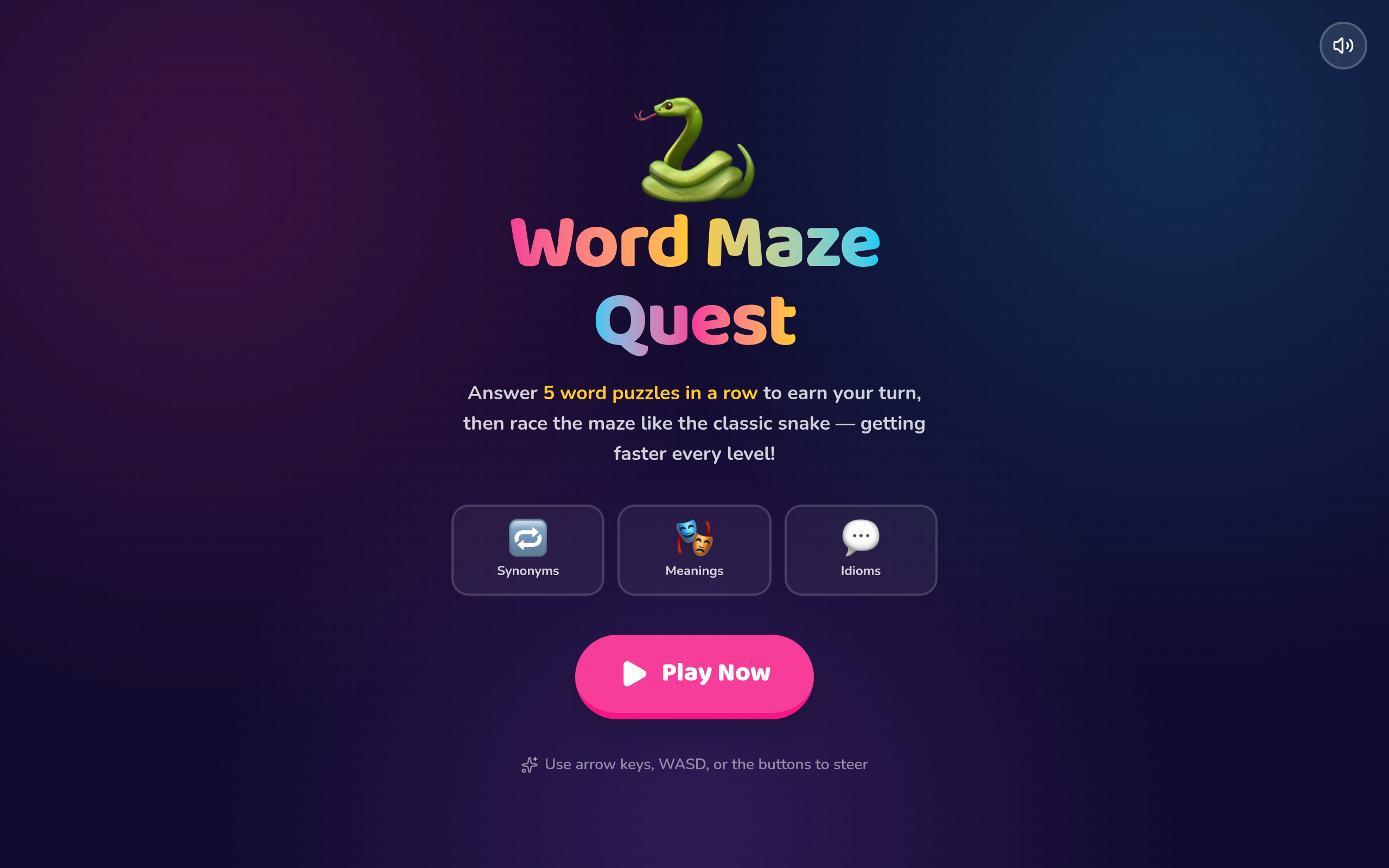
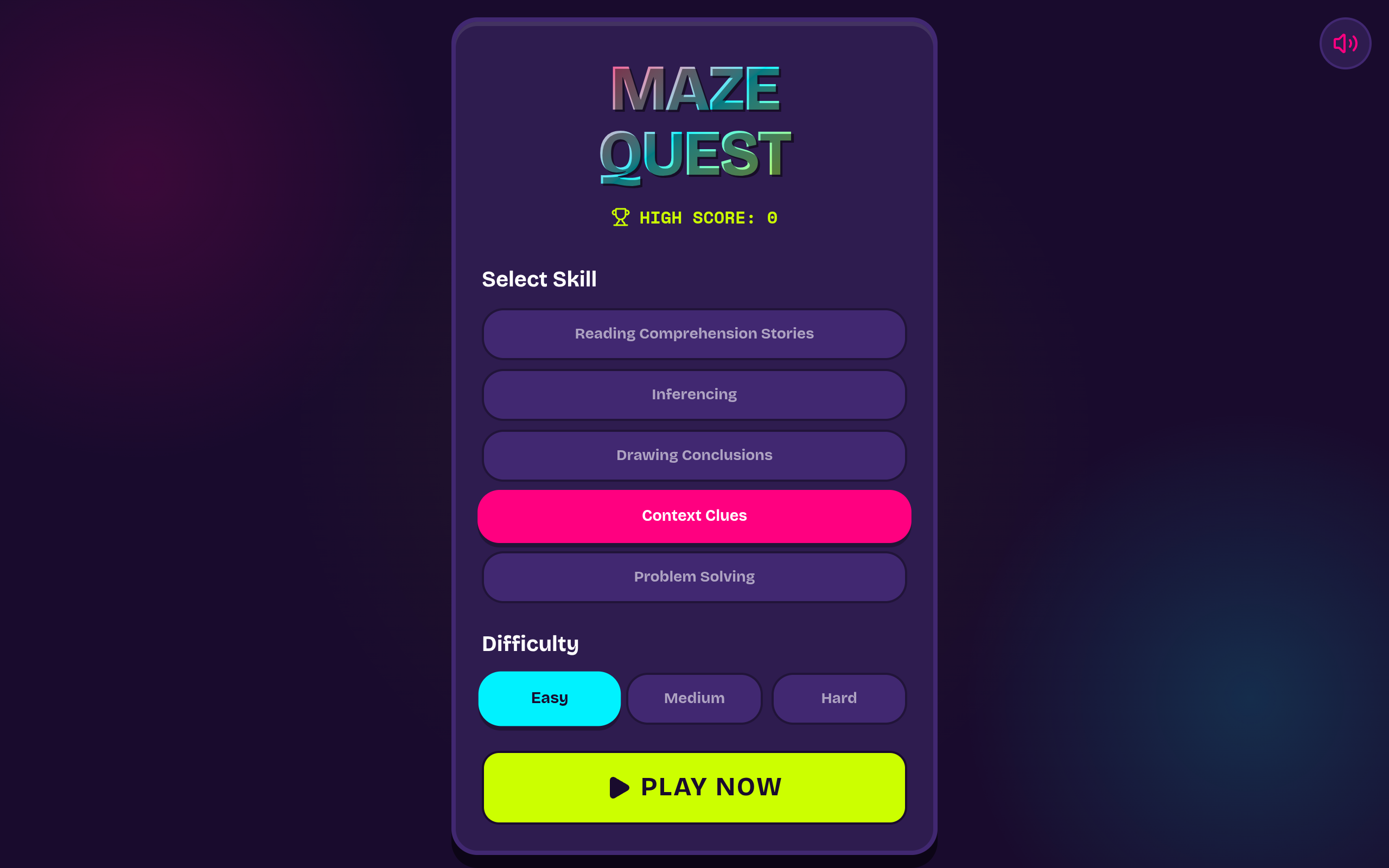
Maze QuestComprehension, Inferencing, ReasoningAges 6–12Anywhere10 minPro
Social SparkSocial Skills, Emotional Regulation, Perspective TakingAges 6–13Anywhere10 minPro

“Session” is a typical sitting, not a level length — none of these games end on their own. A dash means we have not published that detail for a game yet rather than that it does not apply.

How Kids Practice With These Games

  • Repetitions without the fight

    Progress in speech and language runs on volume of practice. A ten-minute game produces dozens of engaged responses where a worksheet produces a handful of reluctant ones — the target is identical, the willingness is not.

  • Built around real therapy goals

    Every game is developed by our team with our clinical lead, a licensed speech-language pathologist, against the targets that appear on IEPs and treatment plans: articulation, vocabulary, comprehension, following directions, and pragmatic language.

  • Nothing to install or print

    They run in any browser, on a phone, tablet, Chromebook, laptop, or classroom smartboard, and they are built touch-first — so the iPad on the sofa and the cart in the school library behave the same way.

  • Practice out loud, not just tapping

    Several games ask the child to say the word or record their answer and play it back. Hearing your own production is the fastest feedback there is, and it is the part a printable can never do.

  • Practice that gets recorded

    An account keeps a history of what was practised across every activity on the site, so "has this actually helped?" has an answer that is not a memory. Trends and sound mastery over time are Pro features.

  • No ads, and no accounts for children

    Games sit behind a login, so they are not in ad networks and not open to the web. A parent, therapist, or teacher holds the account and the data — children never make one themselves.

What to Correct, and What to Let Go

The instinct when your child says “wabbit” is to say “no — rabbit.” It is a reasonable instinct and it is usually the wrong move, because a child who is corrected all day learns that talking to you is a test. Children who feel corrected talk less, and talking less is the opposite of what speech practice needs.

The technique clinicians use instead is called recasting: you say the word back correctly inside a normal sentence, without demanding a repeat. Your child says “I saw a wabbit,” you say “you saw a rabbit! Where was it?” They hear the correct version, they are not put on the spot, and the conversation continues. Do that ten times a day and you have delivered ten clean models with no arguments.

Outside a dedicated practice window, that is essentially all you should do. Inside the practice window you can ask for productions directly — that is what the window is for — and even then, correcting only the target sound and letting every other error pass is what keeps the session short and the child willing.

Model Rather Than Drill

The most reliable thing an untrained adult can do is provide a very large number of correct models. Clinicians call the deliberate version auditory bombardment: you load your own speech with the target sound while your child listens, with no requirement for them to say anything. Reading a book and stressing every target word, or narrating a snack while leaning on the sound, both count.

When your child does attempt the word, respond to the attempt rather than grading it. “That was close, I heard the ssss at the start” tells them what worked and what to aim at. “No, say it again” tells them they failed and gives them nothing to change. If three attempts in a row go wrong, model it once more and move on — the fourth attempt is rarely better and the mood usually is worse.

Resist coaching the mouth unless the SLP has shown you how. Telling a child to “put your tongue behind your teeth” for an R sound is a common piece of well-meaning advice that describes the wrong place, and a child who practises a wrong position gets very good at a wrong position.

Practise the Target the SLP Actually Set

Ask your child's therapist four specific things and write the answers down: which sound, which position in the word (start, middle, or end), which level (single words, phrases, sentences, or conversation), and what a correct production should sound like when your child manages it. Those four answers are the difference between useful home practice and enthusiastic noise.

Level matters more than parents expect. A child who can produce a perfect S in single words often cannot hold it in a sentence, and asking for sentences before they are ready produces a run of failures that makes them stop trying. If practice is going badly, dropping back a level is usually the fix rather than practising harder.

It is also worth asking what not to work on yet. Late-developing sounds like R, S, Z, L, and TH commonly are not mastered until six, seven, or eight, and a therapist who has left one alone has usually left it alone on purpose. Our sound guides list which errors are typical at which age, so you can see where your child sits before you worry.

How Much Is Enough, and When to Ask for Help

Five to ten minutes, a few times a week, done properly, beats twenty minutes of a child being corrected while they would rather be elsewhere. Frequency is what builds the habit; the number of correct productions is what moves the sound. If you get more than that, good — but do not treat a missed day as a failed week.

Signs practice is going well are usually behavioural before they are audible: your child starts self-correcting without being asked, or produces the target sound in a word nobody prompted. That is generalisation starting, and it is a better indicator than a scoring number.

Go back to the SLP if your child is becoming reluctant to talk, if they are frustrated to the point of avoiding practice entirely, if a sound they had mastered has slipped, or if you genuinely cannot tell whether their attempt was right. That last one is not a failing — hearing the difference between a good R and a nearly-good R is a trained skill, and asking is faster than guessing for a month.

Frequently Asked Questions

Should I correct my child when they say a sound wrong during the day?
Not directly. Say the word back correctly inside a normal sentence and carry on — “you saw a rabbit!” rather than “say rabbit.” Save asking for productions for the few minutes a day set aside for practice, and let everything else go.
Should we practise a sound the therapist has not targeted?
Not usually. Therapists pick a target in a deliberate order, often starting with the sound most likely to succeed or most damaging to intelligibility. Practising a different sound splits your child's effort and can build a habit the therapist then has to undo. Ask which target is current and stick to it.
What if I cannot tell whether my child said it correctly?
Ask the SLP to demonstrate the correct and incorrect versions and record it on your phone, so you have a reference at home. Hearing the difference between a correct R and a close-but-wrong R is a trained skill, and guessing risks rewarding the wrong production.
Do these games replace the homework folder from our therapist?
No — they sit alongside it. The folder is targeted at your child's specific goal; the games supply the repetitions and the willingness. If you only have time for one, do the folder, and use a game when the folder has stopped working.
Can I use these if my child is not in speech therapy?
Yes, and plenty of families do. They are practice activities, not a diagnosis or a treatment plan. If you are concerned about your child's speech, a game is not a substitute for an assessment — talk to your pediatrician or contact an SLP directly.

Play One Together This Week

Create a free account, sit down beside your child, and try five minutes. No credit card required.

Get Started Free

Start free • No credit card required