Which Pairs Target Which Process
Minimal pairs are chosen to contrast the specific error pattern a child is using, which means the pair set follows the process rather than the sound. Fronting — back sounds produced at the front of the mouth — is contrasted with pairs like key and tea, gate and date, cot and tot. Stopping, where a fricative becomes a stop, uses sun and ton, sea and tea, fan and pan.
Gliding, where /R/ or /L/ becomes /W/ or /Y/, uses rake and wake, red and wed, lake and wake. Final consonant deletion uses pairs where the whole contrast is the presence of the last sound — boat and bow, seed and sea, cape and Kay. Cluster reduction contrasts the cluster with its reduced form: star and tar, snail and nail, spot and pot.
Choosing the pair correctly is most of the technique. If a child stops fricatives, a pair that contrasts two stops teaches nothing, and a pair whose two words are both outside the child's vocabulary teaches nothing either. The free worksheet generator on this site picks from a curated pair set for exactly that reason.
Minimal Pairs or Articulation Drill?
The two approaches answer different questions and picking wrongly wastes a term. Articulation drill is for a motor problem: the child cannot make the sound, and the work is placement, then repetition, then more repetition. A lateral /S/ distortion in a nine-year-old is a drill problem.
Minimal pairs are for a phonological problem: the child can make both sounds — often demonstrably, in some other word — but is applying a pattern that merges them. The give-away is a rule-shaped error. Every /K/ becomes /T/, or every word loses its final consonant, across the board rather than word by word. When the error is a rule, changing the rule is more efficient than drilling every word it touches.
There is a third possibility worth ruling out: a child who genuinely cannot hear the contrast. If a child cannot reliably point to the right picture when you say the two words, production practice is premature — auditory discrimination comes first, and it is usually quick.
Running a Minimal Pairs Activity
The classic procedure needs pictures of five to ten pairs and about fifteen minutes. Lay both words of a pair in front of the child, ask them to tell you which one to pick up, and then act on what you actually heard rather than what you knew they meant. Hand them the key when they say "tea" — pleasantly, with no correction — and let the mismatch register.
The repair is the moment that matters. Most children will try again spontaneously, and that self-initiated second attempt is worth more than ten prompted repetitions. If they do not, model the contrast clearly — "oh! You wanted the tea, not the key" — and move on. Aim for roughly twenty trials in a sitting rather than perfect accuracy.
Do not correct into a drill. The moment this turns into "say key. Say it again. Say it better", it has become articulation therapy with worse materials. The whole mechanism is the communicative consequence, and adding adult correction removes the reason it works.
What We Have for Contrast Work Today
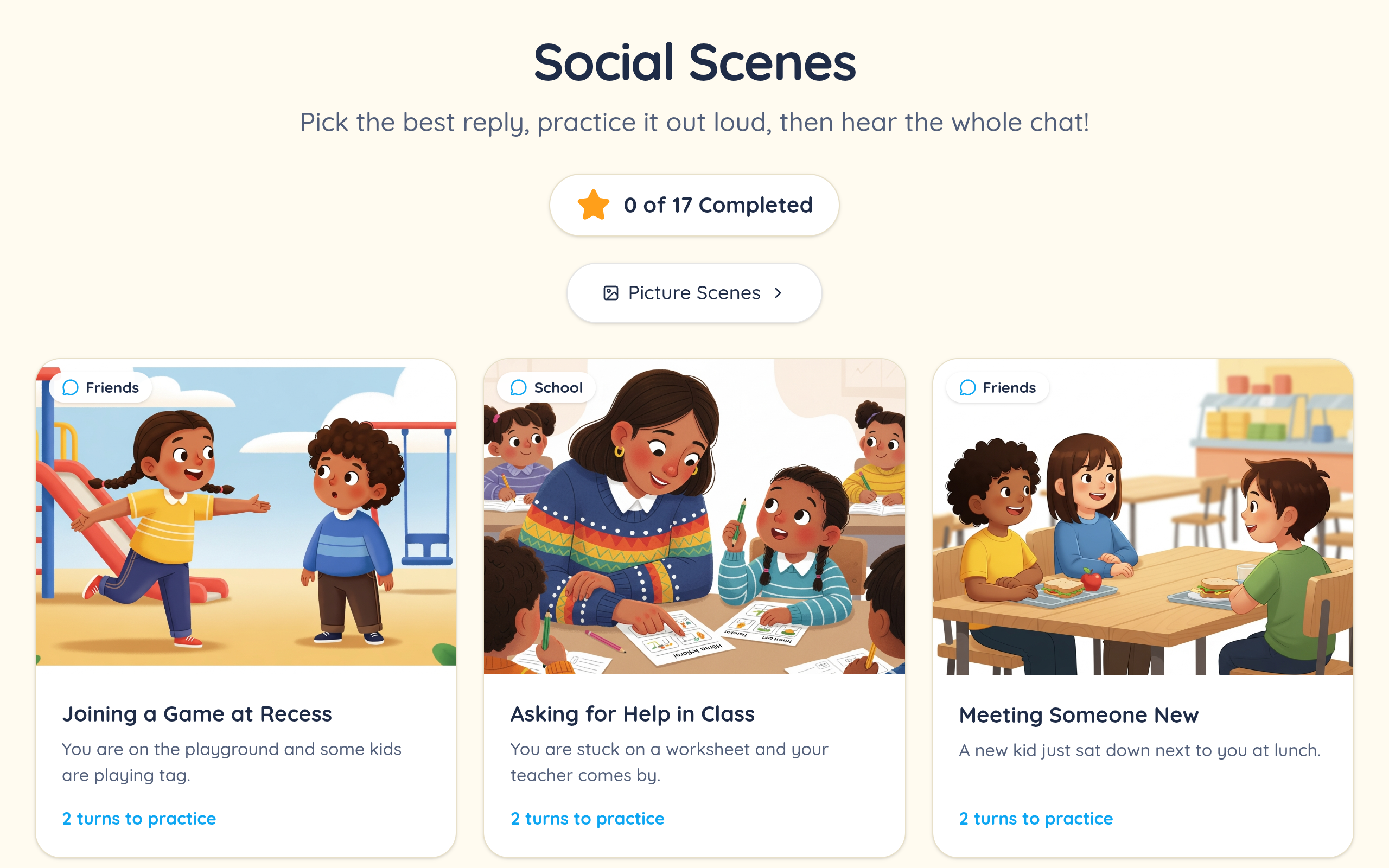
The worksheet generator is the most complete piece: choose a target sound and position and it builds a minimal pairs sheet from a curated pair set, with parent instructions on the page, free on every plan and with nothing to buy. For a session or a homework sheet, that is usually the fastest route to usable material.
Inside an account there is a Minimal Pairs practice activity in the practice tools, built on the same pair data. It is not released to everyone yet, so we are not going to link you to a page you may not be able to open — but it exists, and it is the thing most likely to become a proper game here.
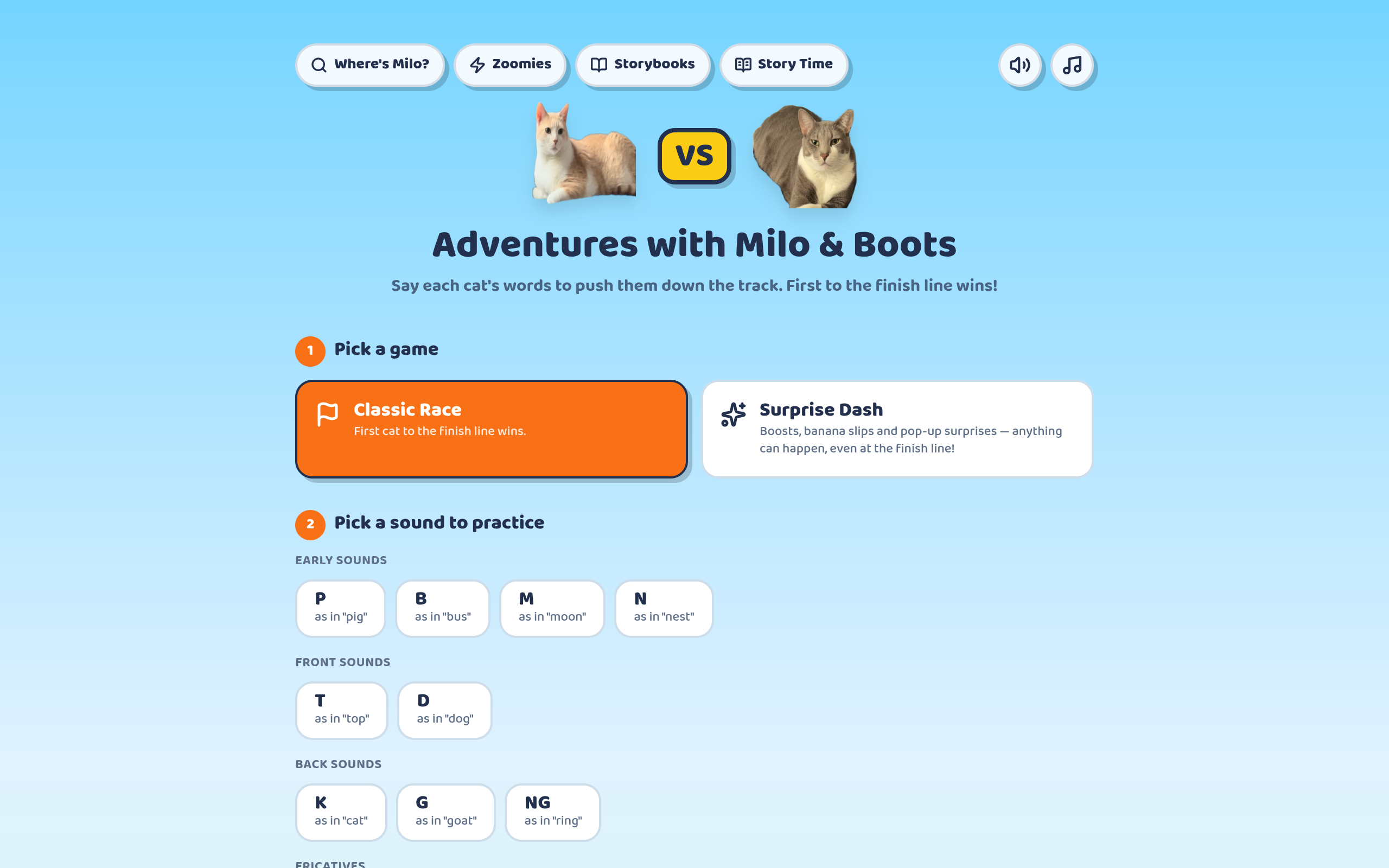
Beyond that, the word lists and the 40 sound guides are free to read with no account and give you the vocabulary for whatever activity you are assembling. What we do not have, and will keep saying we do not have, is a minimal pairs game.